Inside Dinosaur National Monument: Why This Protected Wilderness Matters
 Most people know Dinosaur National Monument for its famous fossil quarry—the incredible wall of ancient bones that draws visitors from around the world. But the monument’s 210,000 acres hold something even more remarkable: two of America’s wildest rivers carving through canyon country that looks much as it did when explorer John Wesley Powell first documented it in 1869.
Dinosaur National Monument rafting provides access to wilderness that most visitors never see. While tens of thousands tour the fossil exhibit each year, only a fraction experience the monument’s heart: deep canyons, free-flowing rivers, ancient archaeological sites, and ecosystems that exist nowhere else on earth.
Understanding Dinosaur National Monument
More Than Dinosaurs
President Woodrow Wilson established Dinosaur National Monument in 1915, initially to protect the extraordinary fossil deposits at the Carnegie Quarry. But the monument expanded dramatically in 1938 to encompass the canyons of the Green and Yampa Rivers.
Today, the monument straddles the Utah-Colorado border, protecting a landscape of remarkable geological, archaeological, and ecological significance. The dinosaur fossils that give the monument its name represent only one chapter in a story spanning hundreds of millions of years.
The Canyon Country
The Green River enters the monument through the Gates of Lodore—towering cliffs that mark the beginning of a 44-mile journey through some of the West’s most spectacular canyon country. Further east, the Yampa River flows 72 miles through its own dramatic canyons before joining the Green at Echo Park.
These canyons expose geological layers representing 300 million years of Earth’s history. Ancient seas, massive deserts, and shifting tectonic plates all left their marks in the rock. The rivers continue the work they’ve done for millennia: carving deeper, revealing older layers, slowly transforming the landscape.
Why Protected Wilderness Matters
A Refuge for Endangered Species
Dinosaur National Monument provides critical habitat for species found nowhere else. Four endangered fish species—Colorado pikeminnow, razorback sucker, humpback chub, and bonytail—survive in these rivers.
These ancient fish evolved over millions of years in wild, free-flowing rivers. They cannot adapt to the controlled flows of dammed rivers that dominate the Colorado River system. The Green and especially the Yampa (the last major undammed tributary) offer some of their final refuges.
Beyond fish, the monument protects bighorn sheep, river otters, golden eagles, peregrine falcons, and countless other species. The diverse habitats—from riverside wetlands to high desert plateaus—support remarkable biodiversity in an otherwise harsh landscape.
Cultural Heritage Preservation
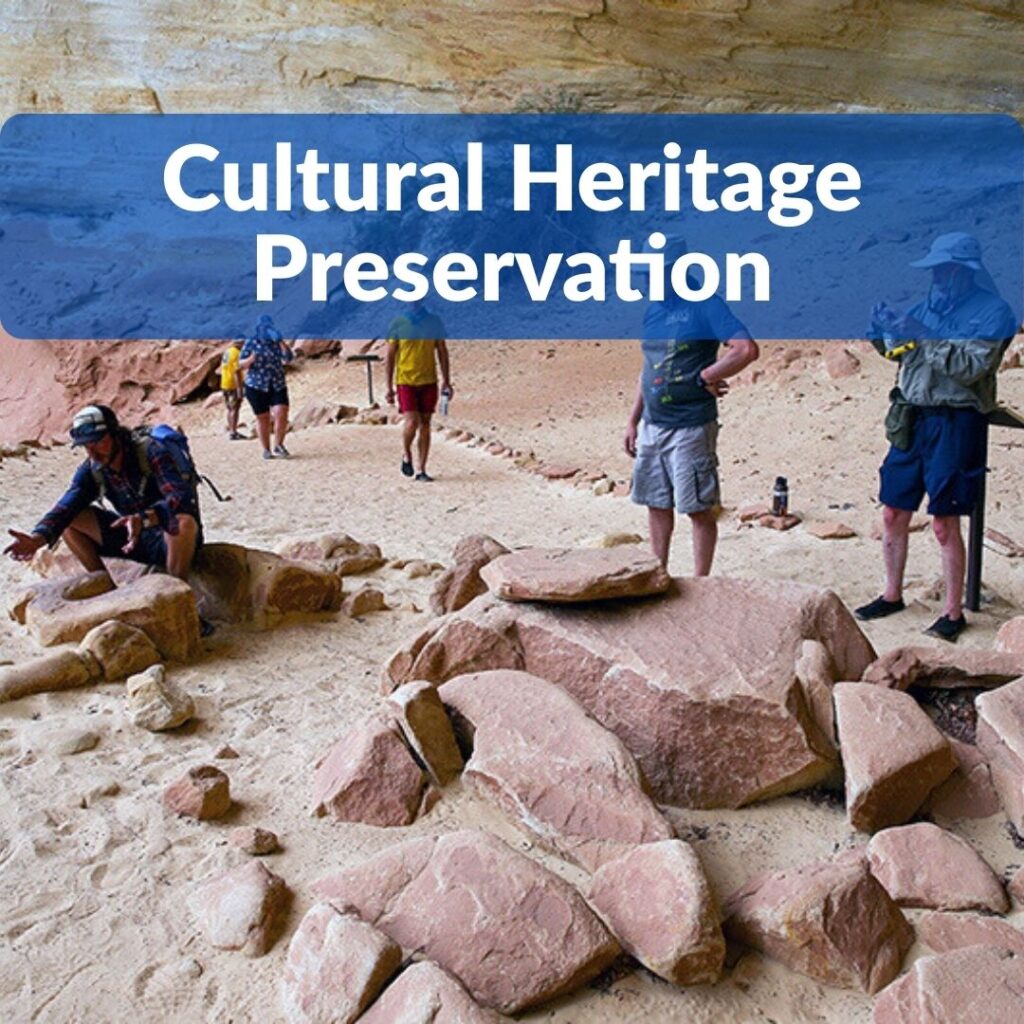 Human presence in the monument dates back at least 7,000 years. The Fremont people left extraordinary archaeological evidence throughout the canyons: petroglyphs depicting bighorn sheep and geometric patterns, pictographs painted with mineral pigments, and structural remains of dwellings and storage sites.
These 700-year-old artworks survive because of the monument’s protected status. Without protection, vandalism, theft, and inadvertent damage would destroy sites that represent irreplaceable cultural heritage.
On Dinosaur National Monument rafting trips, guides lead visitors to carefully selected archaeological sites, explaining their significance while emphasizing the importance of preservation. This educational component transforms ancient art from curiosities into profound connections with past peoples.
Geological Laboratory
Scientists study the monument’s exposed rock layers to understand Earth’s history. The formations visible in canyon walls tell stories of ancient oceans, vast deserts, and the tectonic forces that shaped western North America.
The Weber Sandstone, Lodore Formation, and other geological features accessible throughout the monument provide textbook examples of processes that occurred hundreds of millions of years ago. Protection ensures these formations remain available for research and education.
The Permit System: Managing Access
Why Permits Matter
Dinosaur National Monument operates under a permit system for commercial river trips. This isn’t bureaucratic inconvenience—it’s essential wilderness management.
Limiting the number of people on the rivers at any time protects the resource. Too many visitors create environmental damage: eroded campsites, disturbed wildlife, overwhelmed human waste management, and diminished wilderness character.
The permit system ensures that when you experience Dinosaur National Monument rafting, you encounter genuine wilderness. You’re not navigating crowded rivers or camping on overused beaches. You’re experiencing protected landscape as nature designed it.
Working Within Limits
Dinosaur River Expeditions operates as an authorized concessionaire of the National Park Service, BLM, and Forest Service. This authorization comes with responsibilities: following Leave No Trace principles, limiting group sizes, adhering to designated campsites, and maintaining professional standards.
These requirements protect the resource while ensuring quality experiences for visitors. When you choose a permitted outfitter, you’re supporting sustainable recreation that doesn’t compromise wilderness values.
Comparing Dinosaur to Other National Parks
Solitude vs. Crowds
Popular national parks like Yellowstone, Yosemite, or Grand Canyon receive millions of visitors annually. Crowding degrades the experience—you view geysers surrounded by hundreds of people, photograph famous vistas competing with crowds, and reserve campsites months in advance.
Dinosaur National Monument receives roughly 300,000 visitors per year—and most never venture beyond the fossil quarry and a few roadside viewpoints. The river canyons remain genuinely wild, accessed only by those willing to commit to multi-day expeditions.
This means Dinosaur National Monument rafting delivers something increasingly rare: solitude in spectacular landscapes. For days at a time, you might encounter no one outside your group. The wilderness feels authentic because it is authentic.
Accessibility and Preservation Balance
The monument balances public access with resource protection more successfully than many parks. The fossil quarry provides easy access for those unable to undertake wilderness travel. But the rivers remain wild, requiring significant commitment to experience.
This two-tier approach works. It allows diverse visitors to connect with the monument at appropriate levels while preserving true wilderness for those seeking complete immersion.
Experiencing the Monument by River
Why Rivers Reveal the Truth
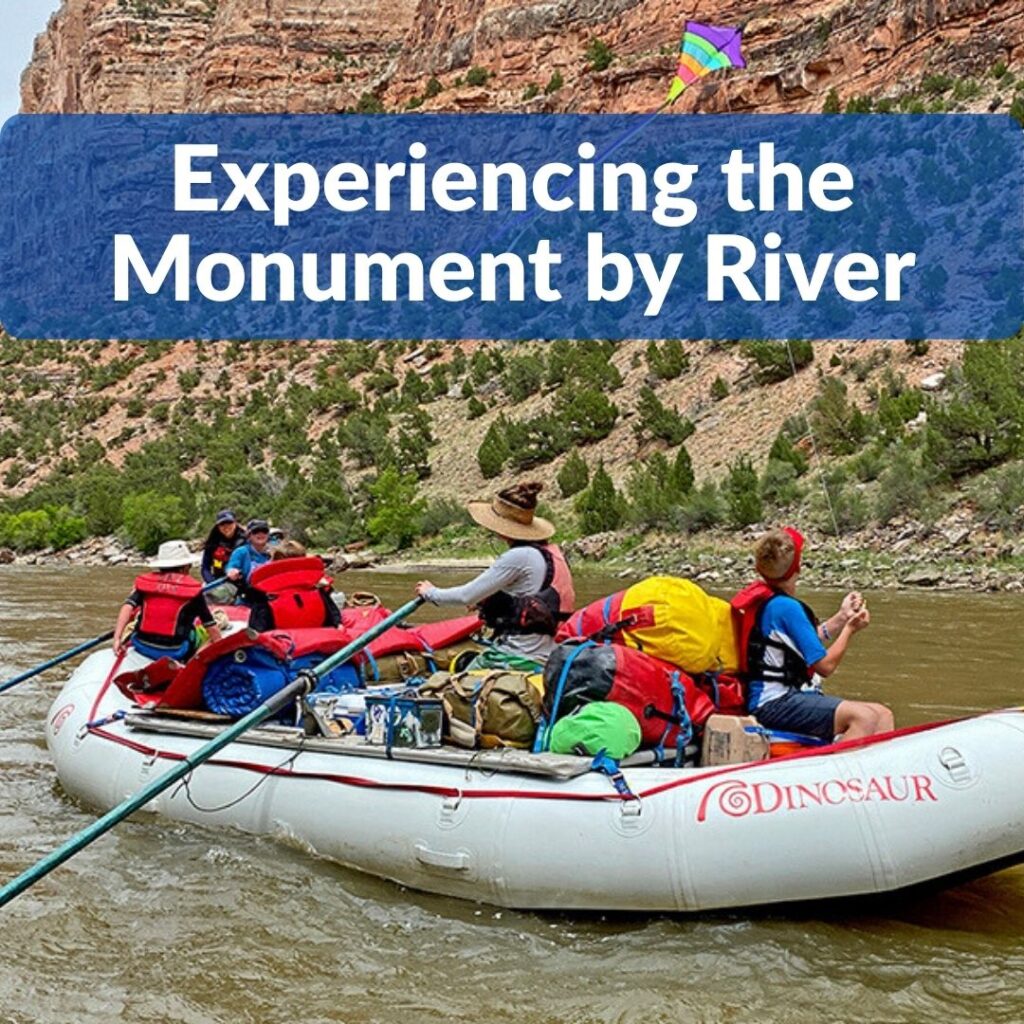 You can drive to overlooks and glimpse the canyons from above. But you can’t understand Dinosaur National Monument without experiencing it from the river.
River travel provides immersion that roadside viewing can’t match. You feel the canyon’s scale. You notice details invisible from rim viewpoints: the way light changes on cliff faces throughout the day, the subtle variations in rock color revealing different formations, the hidden side canyons accessible only by water.
Most importantly, you experience the monument’s wildness. Camping on beaches untouched by roads, swimming in pools no development threatens, sleeping under dark skies unpolluted by artificial light—these experiences connect you to wilderness in ways that day visits simply cannot.
The Educational Advantage
Professional guides on Dinosaur National Monument rafting trips function as interpreters, explaining what you’re seeing and why it matters. They point out geological features, identify wildlife, share cultural history, and discuss conservation challenges.
This interpretation transforms scenery into understanding. You don’t just see pretty cliffs—you comprehend the 300-million-year story they tell. You don’t merely spot bighorn sheep—you understand their ecological role and conservation status.
Conservation Challenges Facing the Monument
Water Rights and Flow Management
The Green and Yampa Rivers flow through one of America’s driest regions where water rights create constant conflict. Agriculture, energy development, and growing populations all demand water from the Colorado River system.
Proposals to dam the Yampa River have appeared repeatedly throughout history. So far, conservation efforts have preserved its free-flowing status. But threats continue, and the monument’s rivers remain vulnerable to upstream water diversions that would alter flows and damage ecosystems.
When you experience Dinosaur National Monument rafting on the Yampa, you’re witnessing something that may not last forever. Each trip documents a disappearing experience and creates advocates for preservation.
Climate Change Impacts
Changing climate patterns affect everything about the monument. Reduced snowpack means lower river flows. Temperature shifts alter plant and animal distributions. Increased drought stress threatens riparian ecosystems.
The endangered fish species that depend on these rivers face additional challenges as warming waters and altered flows make survival even more difficult. Scientists study these changes within the monument, using it as a laboratory to understand broader climate impacts.
Visitor Impact Management
Even carefully managed recreation creates impacts. Campsites experience erosion. Archaeological sites face accidental damage. Wildlife alters behavior around human presence.
The National Park Service continuously works to minimize these impacts through permit management, designated camping areas, and visitor education. Commercial outfitters like Dinosaur River Expeditions play crucial roles by training guides in Leave No Trace principles and modeling responsible recreation.
Leave No Trace: How We Protect What We Love
The Seven Principles
Dinosaur National Monument rafting operated by responsible outfitters follows Leave No Trace principles rigorously:
1. Plan and Prepare: Proper trip planning prevents problems. Guides know regulations, carry required equipment, and prepare for various conditions.
2. Travel and Camp on Durable Surfaces: Use designated campsites. Avoid trampling vegetation or creating new trails. Set up camps on sand or rock rather than fragile soil.
3. Dispose of Waste Properly: Pack out everything—all trash, all human waste (using portable toilet systems), all food scraps. Leave beaches as pristine as you found them.
4. Leave What You Find: Don’t touch petroglyphs. Don’t collect rocks or artifacts. Don’t alter campsites with structures or trenches. Future visitors deserve the same discovery experience.
5. Minimize Campfire Impacts: Use fire pans to prevent scarring beaches. Burn only driftwood, not living vegetation. Remove all ash and charcoal when leaving.
6. Respect Wildlife: Observe from distance. Never feed animals. Store food properly. Minimize noise that disturbs wildlife.
7. Be Considerate of Other Visitors: Keep groups reasonably quiet. Yield right of way on the river. Don’t monopolize campsites or beaches.
Portable Toilets and Human Waste
The “groover” system—portable toilets that pack out all human waste—represents one of river conservation’s most important innovations. Before groovers became standard, human waste accumulated at popular campsites, creating health hazards and environmental damage.
Now, every Dinosaur National Monument rafting trip carries portable toilet systems. All waste gets packed out to proper disposal facilities. This single practice dramatically reduces impact on wilderness rivers.
How Your Visit Supports Conservation
Economic Arguments for Preservation
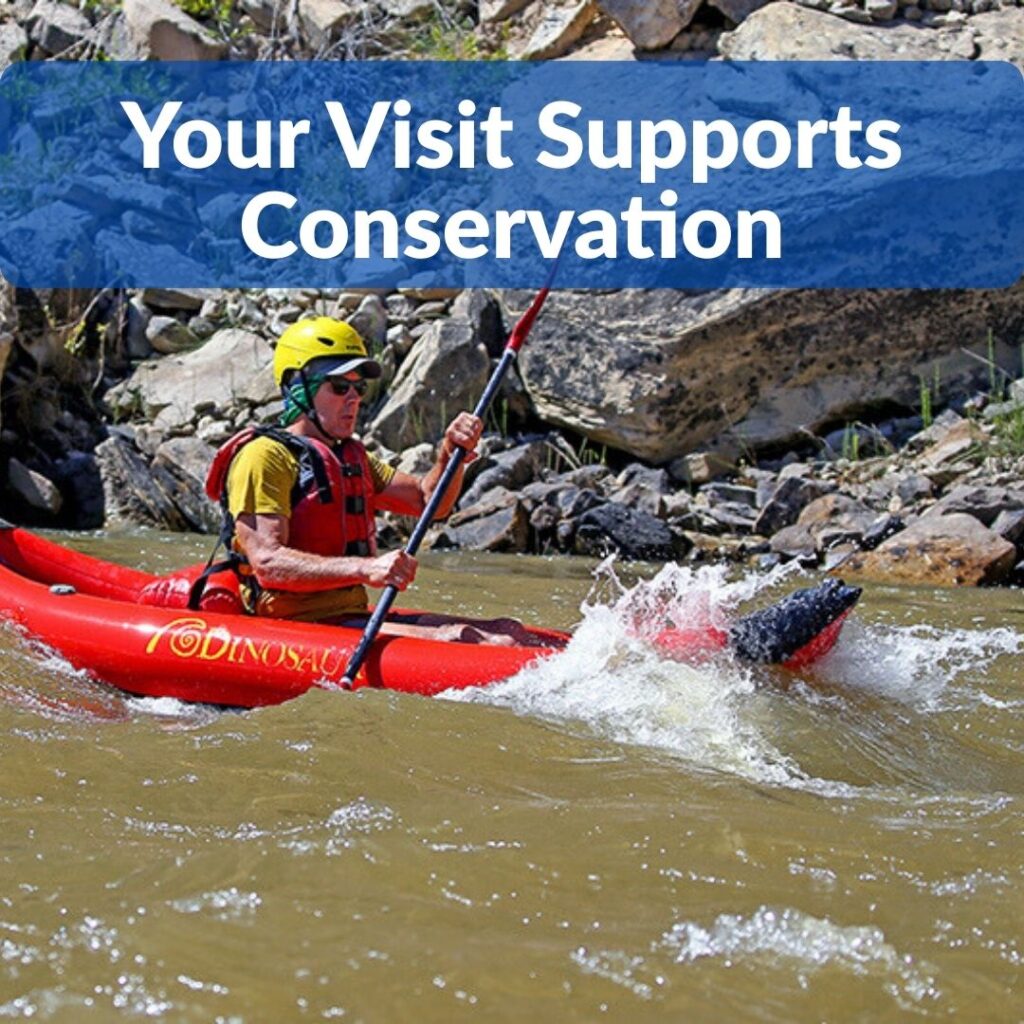 When people experience the monument through responsible recreation, they create economic value that supports conservation. River trips generate income for local communities, create jobs, and demonstrate that wilderness has economic worth beyond extractive uses.
This economic argument matters in policy debates. When communities benefit from wilderness recreation, they’re more likely to support preservation over development.
Creating Advocates
People protect what they love, and they love what they experience. Every person who runs the Green or Yampa Rivers through Dinosaur National Monument becomes an advocate for preservation.
These advocates write letters supporting conservation, vote for pro-wilderness candidates, donate to environmental organizations, and educate others about the monument’s significance. Experiential connection creates lasting commitment to protection.
Supporting Responsible Operators
Choosing permitted, professional outfitters supports sustainable recreation. These operations follow regulations, train guides properly, maintain high environmental standards, and work cooperatively with land management agencies.
When you book Dinosaur National Monument rafting through responsible operators, you vote with your dollars for the kind of recreation that protects resources while providing access.
The Future of Dinosaur National Monument
Ongoing Threats
The monument faces continued pressures: water development proposals, energy extraction adjacent to boundaries, climate change impacts, and funding challenges that affect maintenance and enforcement.
No protected area is permanently safe. Conservation requires constant vigilance and political will to maintain protections against short-term economic pressures.
Reasons for Hope
Despite challenges, Dinosaur National Monument continues thriving. Public support remains strong. Management agencies demonstrate commitment to protection. Organizations like Friends of Dinosaur National Monument work tirelessly to support conservation.
The permit system works—rivers remain in excellent condition despite recreational use. Leave No Trace principles have become standard practice. Archaeological sites receive proper protection and monitoring.
Your Role
Every visitor to Dinosaur National Monument helps determine its future. When you experience it through Dinosaur National Monument rafting, you become part of a community that values wilderness, understands ecology, and supports preservation.
Share your experience. Tell others why the monument matters. Support policies that protect public lands. Return to experience the rivers again, bringing new people who will join the community of advocates.
Planning Your Monument Experience
Ready to experience the wilderness that makes Dinosaur National Monument extraordinary? Visit our Google Business profile to learn more about how we help visitors connect with this protected landscape.
See what guests are saying about their Dinosaur National Monument rafting adventures:
-
We did a 1 day rafting trip on 5/26 to Flaming Gorge and had a great time! Our guides were knowledgeable and taught us a lot about the local history... read more

 Sara Dixon
Jen was a great guide. Extremely knowledgeable about the plants and animals of the area and an expert guide.
Brian B
-
Our experience on the 5 day Yampa river trip was great. The guides ensured that our experiences on the water, in camp, and on hikes were the best. The scenery... read more
Dave Stangler
Enjoyed a spectacular 5 day rafting trip on the Tampa and Green Rivers with Dinosaur River Expeditions. The guides were knowledgeable and very competent. Food delicious and plentiful. The campsites... read more
Bonny Barr
-
If you are looking to reconnect with nature all I can say is wow. Stunning scenery. Exciting rapids. Incredible time spent on a true adventure. Worth every single penny. Special... read more
Micah Breden
We took our son and his wife and three boys ages 9-14 on the Gates of Ladore 4 day trip. Everyone had a fantastic time, even fussy eaters found food... read more
Karen Dunn


Find Our Vernal, Utah Location
Frequently Asked Questions About Dinosaur National Monument Rafting
Why is Dinosaur National Monument rafting better than visiting the fossil quarry alone?
While the fossil quarry showcases remarkable paleontological discoveries, it represents only a small fraction of what makes Dinosaur National Monument significant. River trips immerse you in 210,000 acres of protected wilderness, revealing deep canyons, ancient petroglyphs, endangered species habitat, and geological formations spanning 300 million years. The monument’s true character emerges through multi-day wilderness immersion rather than roadside viewing. Most visitors who experience both report that river trips provide far deeper connection to the landscape and understanding of why this wilderness deserves protection. The canyons accessible only by water showcase the monument’s wild heart that road access cannot reveal.
How does the permit system affect my Dinosaur National Monument rafting experience?
The National Park Service permit system limits commercial and private river trips to protect wilderness character and prevent environmental damage. This benefits your experience significantly—you encounter genuine solitude rather than crowded rivers, camp on pristine beaches rather than overused sites, and experience wildlife undisturbed by excessive human presence. Permitted outfitters like Dinosaur River Expeditions must meet professional standards, follow Leave No Trace principles, and maintain group size limits. While permits create booking challenges during peak season, they ensure that when you experience the monument, you’re seeing protected wilderness rather than degraded river corridors like those found on unmanaged waterways.
What endangered species might I see during Dinosaur National Monument rafting?
The monument protects critical habitat for four endangered fish species—Colorado pikeminnow (which can reach six feet long), razorback sucker, humpback chub, and bonytail. While these fish are rarely visible from rafts due to murky water, knowing they survive in these protected rivers adds significance to your journey. You’re more likely to see endangered peregrine falcons hunting along cliffs or protected bighorn sheep populations navigating impossible canyon walls. River otters, though not endangered, are uncommon elsewhere and frequently spotted playing in eddies. Golden eagles soar overhead. The monument’s protected status allows these species to thrive while educating visitors about conservation importance.
Can I visit the archaeological sites in Dinosaur National Monument on my own?
Most archaeological sites within the monument’s river canyons are inaccessible without multi-day rafting trips, and many are protected from public access to prevent damage. The sites accessible during Dinosaur National Monument rafting require guided visits—professional guides know which sites permit visitation, explain proper viewing etiquette, and educate guests about cultural significance. These 700-year-old Fremont petroglyphs and pictographs are irreplaceable cultural resources that vandalism or inadvertent damage could destroy forever. Visiting with permitted outfitters ensures you experience these remarkable sites while protecting them for future generations. Some roadside archaeological sites exist near monument headquarters, but the most spectacular and well-preserved examples require river access.
How does climate change threaten Dinosaur National Monument and its rivers?
Climate change poses multiple threats to the monument’s ecosystems. Reduced snowpack in the Rocky Mountains decreases river flows, particularly affecting the Yampa River’s spring runoff that sustains endangered fish spawning. Warmer water temperatures stress cold-water species adapted to historical conditions. Extended droughts damage riparian vegetation that stabilizes riverbanks and provides wildlife habitat. Altered precipitation patterns may increase flash flooding that erodes archaeological sites. The monument serves as a living laboratory where scientists study these impacts and develop conservation strategies. When you experience Dinosaur National Monument rafting, you witness ecosystems under stress from global changes—making the case for both local conservation and broader climate action. The free-flowing Yampa represents what many rivers once were and what we risk losing without decisive climate response.


