Dinosaur National Monument Rafting

Inside Dinosaur National Monument: Why This Protected Wilderness Matters

Dinosaur National Monument RaftingMost people know Dinosaur National Monument for its famous fossil quarry—the incredible wall of ancient bones that draws visitors from around the world. But the monument’s 210,000 acres hold something even more remarkable: two of America’s wildest rivers carving through canyon country that looks much as it did when explorer John Wesley Powell first documented it in 1869.

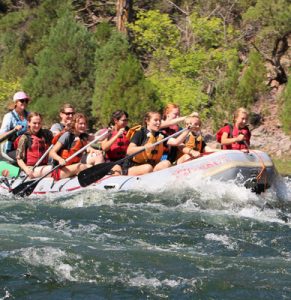
Dinosaur National Monument rafting provides access to wilderness that most visitors never see. While tens of thousands tour the fossil exhibit each year, only a fraction experience the monument’s heart: deep canyons, free-flowing rivers, ancient archaeological sites, and ecosystems that exist nowhere else on earth.

Understanding Dinosaur National Monument

More Than Dinosaurs

President Woodrow Wilson established Dinosaur National Monument in 1915, initially to protect the extraordinary fossil deposits at the Carnegie Quarry. But the monument expanded dramatically in 1938 to encompass the canyons of the Green and Yampa Rivers.

Today, the monument straddles the Utah-Colorado border, protecting a landscape of remarkable geological, archaeological, and ecological significance. The dinosaur fossils that give the monument its name represent only one chapter in a story spanning hundreds of millions of years.

The Canyon Country

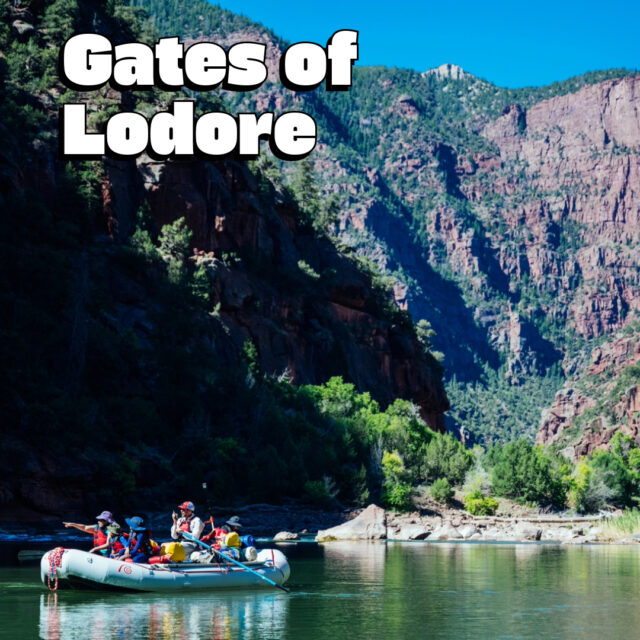
The Green River enters the monument through the Gates of Lodore—towering cliffs that mark the beginning of a 44-mile journey through some of the West’s most spectacular canyon country. Further east, the Yampa River flows 72 miles through its own dramatic canyons before joining the Green at Echo Park.

These canyons expose geological layers representing 300 million years of Earth’s history. Ancient seas, massive deserts, and shifting tectonic plates all left their marks in the rock. The rivers continue the work they’ve done for millennia: carving deeper, revealing older layers, slowly transforming the landscape.

Why Protected Wilderness Matters

A Refuge for Endangered Species

Dinosaur National Monument provides critical habitat for species found nowhere else. Four endangered fish species—Colorado pikeminnow, razorback sucker, humpback chub, and bonytail—survive in these rivers.

These ancient fish evolved over millions of years in wild, free-flowing rivers. They cannot adapt to the controlled flows of dammed rivers that dominate the Colorado River system. The Green and especially the Yampa (the last major undammed tributary) offer some of their final refuges.

Beyond fish, the monument protects bighorn sheep, river otters, golden eagles, peregrine falcons, and countless other species. The diverse habitats—from riverside wetlands to high desert plateaus—support remarkable biodiversity in an otherwise harsh landscape.

Cultural Heritage Preservation
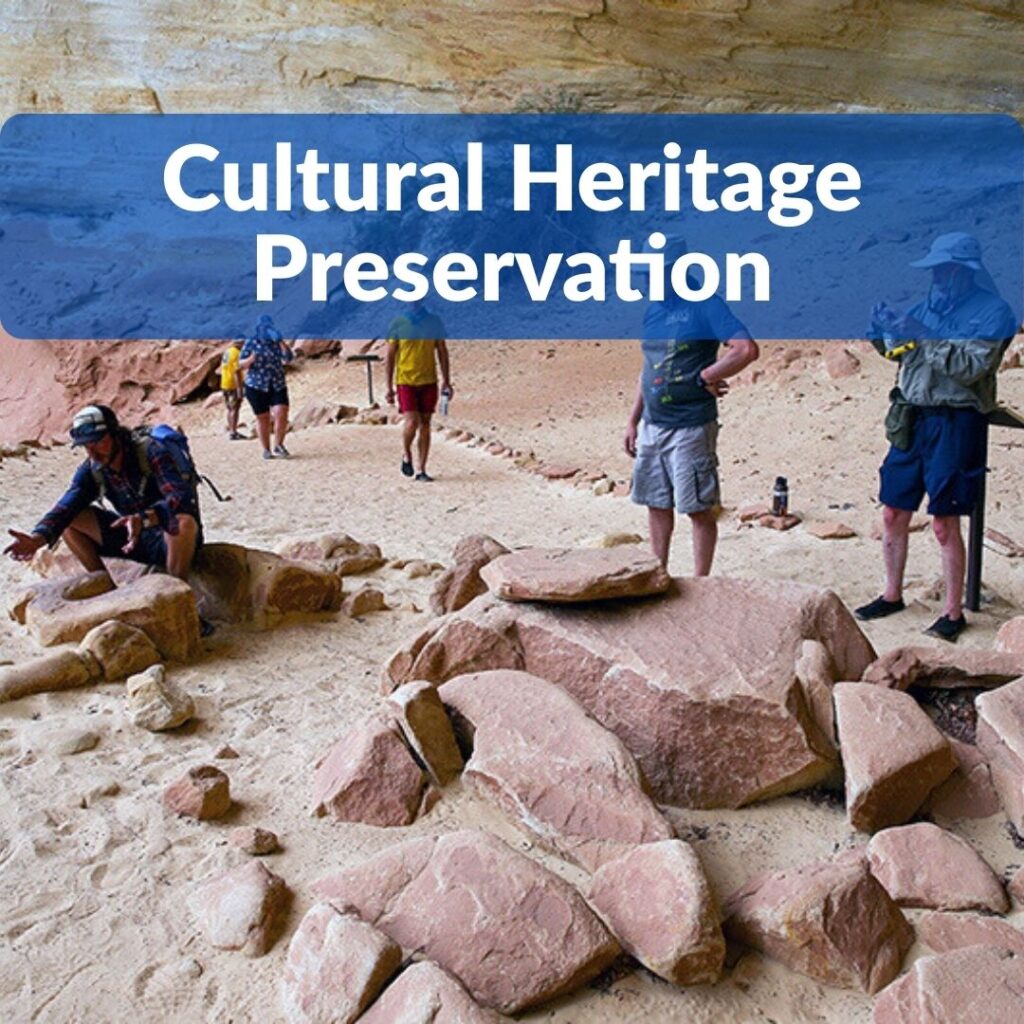
Dinosaur National Monument Cultural Heritage PreservationHuman presence in the monument dates back at least 7,000 years. The Fremont people left extraordinary archaeological evidence throughout the canyons: petroglyphs depicting bighorn sheep and geometric patterns, pictographs painted with mineral pigments, and structural remains of dwellings and storage sites.

These 700-year-old artworks survive because of the monument’s protected status. Without protection, vandalism, theft, and inadvertent damage would destroy sites that represent irreplaceable cultural heritage.

On Dinosaur National Monument rafting trips, guides lead visitors to carefully selected archaeological sites, explaining their significance while emphasizing the importance of preservation. This educational component transforms ancient art from curiosities into profound connections with past peoples.

Geological Laboratory

Scientists study the monument’s exposed rock layers to understand Earth’s history. The formations visible in canyon walls tell stories of ancient oceans, vast deserts, and the tectonic forces that shaped western North America.

The Weber Sandstone, Lodore Formation, and other geological features accessible throughout the monument provide textbook examples of processes that occurred hundreds of millions of years ago. Protection ensures these formations remain available for research and education.

The Permit System: Managing Access

Why Permits Matter

Dinosaur National Monument operates under a permit system for commercial river trips. This isn’t bureaucratic inconvenience—it’s essential wilderness management.

Limiting the number of people on the rivers at any time protects the resource. Too many visitors create environmental damage: eroded campsites, disturbed wildlife, overwhelmed human waste management, and diminished wilderness character.

The permit system ensures that when you experience Dinosaur National Monument rafting, you encounter genuine wilderness. You’re not navigating crowded rivers or camping on overused beaches. You’re experiencing protected landscape as nature designed it.

Working Within Limits

Dinosaur River Expeditions operates as an authorized concessionaire of the National Park Service, BLM, and Forest Service. This authorization comes with responsibilities: following Leave No Trace principles, limiting group sizes, adhering to designated campsites, and maintaining professional standards.

These requirements protect the resource while ensuring quality experiences for visitors. When you choose a permitted outfitter, you’re supporting sustainable recreation that doesn’t compromise wilderness values.

Comparing Dinosaur to Other National Parks

Solitude vs. Crowds

Popular national parks like Yellowstone, Yosemite, or Grand Canyon receive millions of visitors annually. Crowding degrades the experience—you view geysers surrounded by hundreds of people, photograph famous vistas competing with crowds, and reserve campsites months in advance.

Dinosaur National Monument receives roughly 300,000 visitors per year—and most never venture beyond the fossil quarry and a few roadside viewpoints. The river canyons remain genuinely wild, accessed only by those willing to commit to multi-day expeditions.

This means Dinosaur National Monument rafting delivers something increasingly rare: solitude in spectacular landscapes. For days at a time, you might encounter no one outside your group. The wilderness feels authentic because it is authentic.

Accessibility and Preservation Balance

The monument balances public access with resource protection more successfully than many parks. The fossil quarry provides easy access for those unable to undertake wilderness travel. But the rivers remain wild, requiring significant commitment to experience.

This two-tier approach works. It allows diverse visitors to connect with the monument at appropriate levels while preserving true wilderness for those seeking complete immersion.

Experiencing the Monument by River

Why Rivers Reveal the Truth
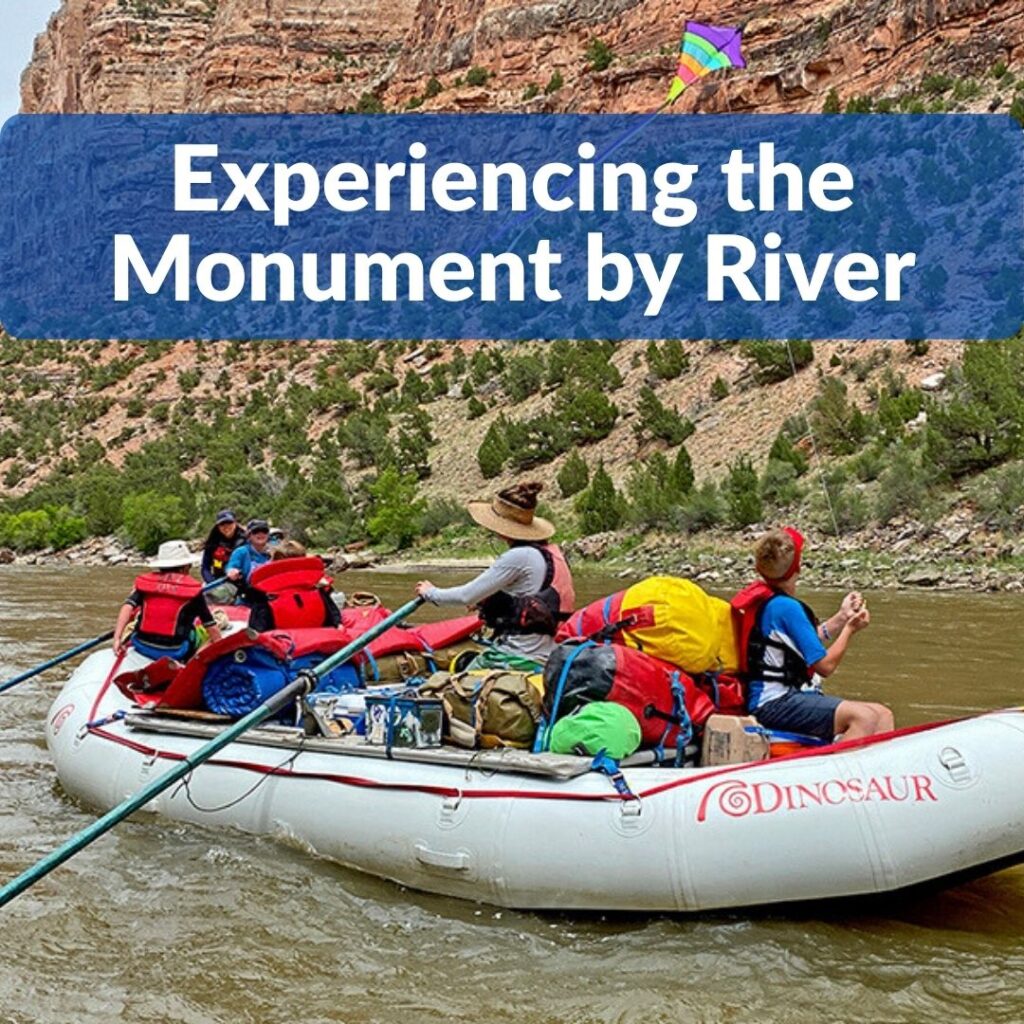
experience Dinosaur National Monument RaftingYou can drive to overlooks and glimpse the canyons from above. But you can’t understand Dinosaur National Monument without experiencing it from the river.

River travel provides immersion that roadside viewing can’t match. You feel the canyon’s scale. You notice details invisible from rim viewpoints: the way light changes on cliff faces throughout the day, the subtle variations in rock color revealing different formations, the hidden side canyons accessible only by water.

Most importantly, you experience the monument’s wildness. Camping on beaches untouched by roads, swimming in pools no development threatens, sleeping under dark skies unpolluted by artificial light—these experiences connect you to wilderness in ways that day visits simply cannot.

The Educational Advantage

Professional guides on Dinosaur National Monument rafting trips function as interpreters, explaining what you’re seeing and why it matters. They point out geological features, identify wildlife, share cultural history, and discuss conservation challenges.

This interpretation transforms scenery into understanding. You don’t just see pretty cliffs—you comprehend the 300-million-year story they tell. You don’t merely spot bighorn sheep—you understand their ecological role and conservation status.

Conservation Challenges Facing the Monument

Water Rights and Flow Management

The Green and Yampa Rivers flow through one of America’s driest regions where water rights create constant conflict. Agriculture, energy development, and growing populations all demand water from the Colorado River system.

Proposals to dam the Yampa River have appeared repeatedly throughout history. So far, conservation efforts have preserved its free-flowing status. But threats continue, and the monument’s rivers remain vulnerable to upstream water diversions that would alter flows and damage ecosystems.

When you experience Dinosaur National Monument rafting on the Yampa, you’re witnessing something that may not last forever. Each trip documents a disappearing experience and creates advocates for preservation.

Climate Change Impacts

Changing climate patterns affect everything about the monument. Reduced snowpack means lower river flows. Temperature shifts alter plant and animal distributions. Increased drought stress threatens riparian ecosystems.

The endangered fish species that depend on these rivers face additional challenges as warming waters and altered flows make survival even more difficult. Scientists study these changes within the monument, using it as a laboratory to understand broader climate impacts.

Visitor Impact Management

Even carefully managed recreation creates impacts. Campsites experience erosion. Archaeological sites face accidental damage. Wildlife alters behavior around human presence.

The National Park Service continuously works to minimize these impacts through permit management, designated camping areas, and visitor education. Commercial outfitters like Dinosaur River Expeditions play crucial roles by training guides in Leave No Trace principles and modeling responsible recreation.

Leave No Trace: How We Protect What We Love

The Seven Principles

Dinosaur National Monument rafting operated by responsible outfitters follows Leave No Trace principles rigorously:

1. Plan and Prepare: Proper trip planning prevents problems. Guides know regulations, carry required equipment, and prepare for various conditions.

2. Travel and Camp on Durable Surfaces: Use designated campsites. Avoid trampling vegetation or creating new trails. Set up camps on sand or rock rather than fragile soil.

3. Dispose of Waste Properly: Pack out everything—all trash, all human waste (using portable toilet systems), all food scraps. Leave beaches as pristine as you found them.

4. Leave What You Find: Don’t touch petroglyphs. Don’t collect rocks or artifacts. Don’t alter campsites with structures or trenches. Future visitors deserve the same discovery experience.

5. Minimize Campfire Impacts: Use fire pans to prevent scarring beaches. Burn only driftwood, not living vegetation. Remove all ash and charcoal when leaving.

6. Respect Wildlife: Observe from distance. Never feed animals. Store food properly. Minimize noise that disturbs wildlife.

7. Be Considerate of Other Visitors: Keep groups reasonably quiet. Yield right of way on the river. Don’t monopolize campsites or beaches.

Portable Toilets and Human Waste

The “groover” system—portable toilets that pack out all human waste—represents one of river conservation’s most important innovations. Before groovers became standard, human waste accumulated at popular campsites, creating health hazards and environmental damage.

Now, every Dinosaur National Monument rafting trip carries portable toilet systems. All waste gets packed out to proper disposal facilities. This single practice dramatically reduces impact on wilderness rivers.

How Your Visit Supports Conservation

Economic Arguments for Preservation
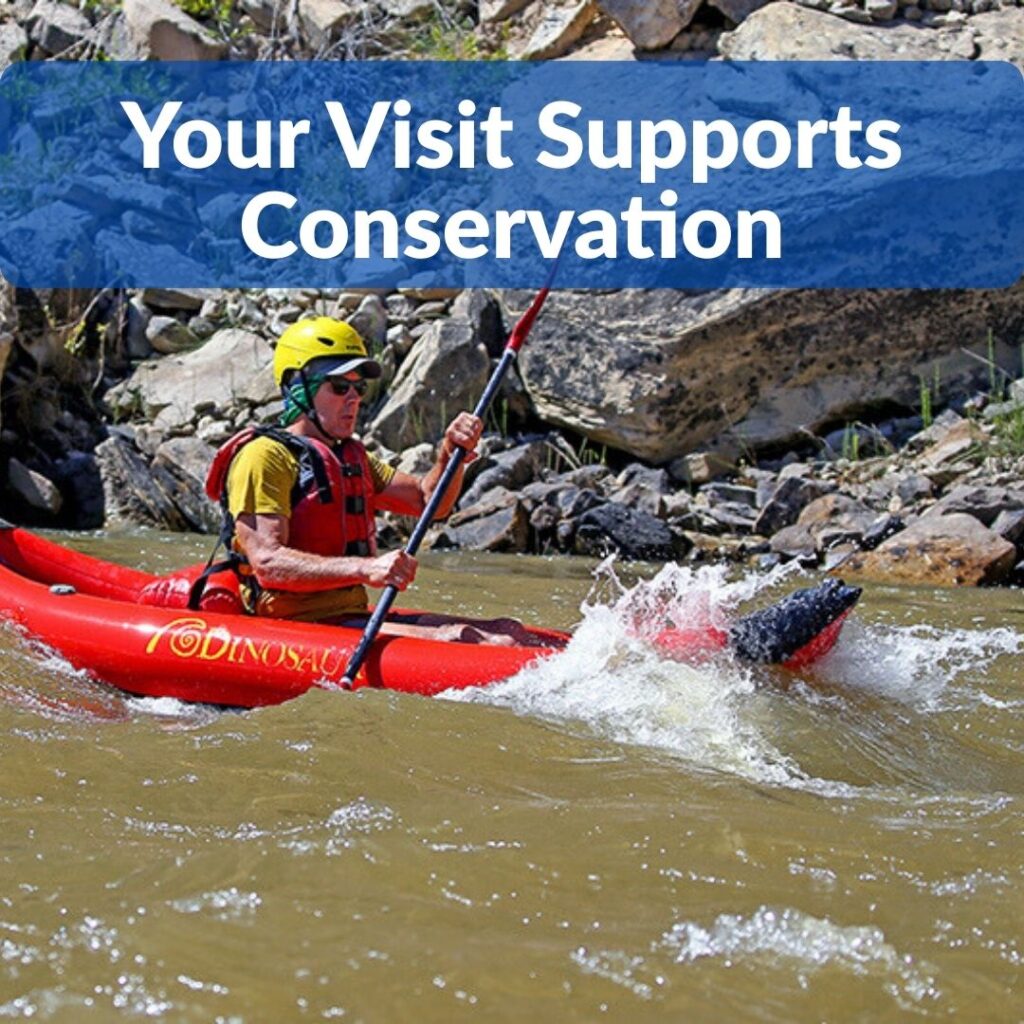
Visit Dinosaur National Monument in UtahWhen people experience the monument through responsible recreation, they create economic value that supports conservation. River trips generate income for local communities, create jobs, and demonstrate that wilderness has economic worth beyond extractive uses.

This economic argument matters in policy debates. When communities benefit from wilderness recreation, they’re more likely to support preservation over development.

Creating Advocates

People protect what they love, and they love what they experience. Every person who runs the Green or Yampa Rivers through Dinosaur National Monument becomes an advocate for preservation.

These advocates write letters supporting conservation, vote for pro-wilderness candidates, donate to environmental organizations, and educate others about the monument’s significance. Experiential connection creates lasting commitment to protection.

Supporting Responsible Operators

Choosing permitted, professional outfitters supports sustainable recreation. These operations follow regulations, train guides properly, maintain high environmental standards, and work cooperatively with land management agencies.

When you book Dinosaur National Monument rafting through responsible operators, you vote with your dollars for the kind of recreation that protects resources while providing access.

The Future of Dinosaur National Monument

Ongoing Threats

The monument faces continued pressures: water development proposals, energy extraction adjacent to boundaries, climate change impacts, and funding challenges that affect maintenance and enforcement.

No protected area is permanently safe. Conservation requires constant vigilance and political will to maintain protections against short-term economic pressures.

Reasons for Hope

Despite challenges, Dinosaur National Monument continues thriving. Public support remains strong. Management agencies demonstrate commitment to protection. Organizations like Friends of Dinosaur National Monument work tirelessly to support conservation.

The permit system works—rivers remain in excellent condition despite recreational use. Leave No Trace principles have become standard practice. Archaeological sites receive proper protection and monitoring.

Your Role

Every visitor to Dinosaur National Monument helps determine its future. When you experience it through Dinosaur National Monument rafting, you become part of a community that values wilderness, understands ecology, and supports preservation.

Share your experience. Tell others why the monument matters. Support policies that protect public lands. Return to experience the rivers again, bringing new people who will join the community of advocates.

Planning Your Monument Experience

Ready to experience the wilderness that makes Dinosaur National Monument extraordinary? Visit our Google Business profile to learn more about how we help visitors connect with this protected landscape.

See what guests are saying about their Dinosaur National Monument rafting adventures:

  • I adored the people-friendly attitude. We had so much fun on the river. The lunch was delicious. The guides competent and funny. The transport driver was kind and efficient. I... read more

    Anne Moscrip Avatar Anne Moscrip

    We did a 1 day rafting trip on 5/26 to Flaming Gorge and had a great time! Our guides were knowledgeable and taught us a lot about the local history... read more

    Sara Dixon Avatar Sara Dixon
  • I took my family (two kids in high school) on a 4 day, 3 night trip through Gates of Lodore to Split Mountain (July 2024) and I cannot say enough... read more

    Joshua Kesler Avatar Joshua Kesler

    We just went on the 4 day float, Through the Gates of Lodor. There was 7 of us from NC. The trip was awesome, the guides were professional, fun and... read more

    Melissa Breden Avatar Melissa Breden
  • Top notch guides. We had a great time floating the Green River. Would definitely use them again. Highly recommend!

    Trevor Danielson Avatar Trevor Danielson

    I did the Yampa River trip with Dinosaur River Expeditions in June of 2024. I cannot recommend the Yampa and DRE highly enough. My trip was truly wonderful. I would... read more

    Joe Malkovich Avatar Joe Malkovich

Find Our Vernal, Utah Location

Frequently Asked Questions About Dinosaur National Monument Rafting

Why is Dinosaur National Monument rafting better than visiting the fossil quarry alone?

While the fossil quarry showcases remarkable paleontological discoveries, it represents only a small fraction of what makes Dinosaur National Monument significant. River trips immerse you in 210,000 acres of protected wilderness, revealing deep canyons, ancient petroglyphs, endangered species habitat, and geological formations spanning 300 million years. The monument’s true character emerges through multi-day wilderness immersion rather than roadside viewing. Most visitors who experience both report that river trips provide far deeper connection to the landscape and understanding of why this wilderness deserves protection. The canyons accessible only by water showcase the monument’s wild heart that road access cannot reveal.

How does the permit system affect my Dinosaur National Monument rafting experience?

The National Park Service permit system limits commercial and private river trips to protect wilderness character and prevent environmental damage. This benefits your experience significantly—you encounter genuine solitude rather than crowded rivers, camp on pristine beaches rather than overused sites, and experience wildlife undisturbed by excessive human presence. Permitted outfitters like Dinosaur River Expeditions must meet professional standards, follow Leave No Trace principles, and maintain group size limits. While permits create booking challenges during peak season, they ensure that when you experience the monument, you’re seeing protected wilderness rather than degraded river corridors like those found on unmanaged waterways.

What endangered species might I see during Dinosaur National Monument rafting?

The monument protects critical habitat for four endangered fish species—Colorado pikeminnow (which can reach six feet long), razorback sucker, humpback chub, and bonytail. While these fish are rarely visible from rafts due to murky water, knowing they survive in these protected rivers adds significance to your journey. You’re more likely to see endangered peregrine falcons hunting along cliffs or protected bighorn sheep populations navigating impossible canyon walls. River otters, though not endangered, are uncommon elsewhere and frequently spotted playing in eddies. Golden eagles soar overhead. The monument’s protected status allows these species to thrive while educating visitors about conservation importance.

Can I visit the archaeological sites in Dinosaur National Monument on my own?

Most archaeological sites within the monument’s river canyons are inaccessible without multi-day rafting trips, and many are protected from public access to prevent damage. The sites accessible during Dinosaur National Monument rafting require guided visits—professional guides know which sites permit visitation, explain proper viewing etiquette, and educate guests about cultural significance. These 700-year-old Fremont petroglyphs and pictographs are irreplaceable cultural resources that vandalism or inadvertent damage could destroy forever. Visiting with permitted outfitters ensures you experience these remarkable sites while protecting them for future generations. Some roadside archaeological sites exist near monument headquarters, but the most spectacular and well-preserved examples require river access.

How does climate change threaten Dinosaur National Monument and its rivers?

Climate change poses multiple threats to the monument’s ecosystems. Reduced snowpack in the Rocky Mountains decreases river flows, particularly affecting the Yampa River’s spring runoff that sustains endangered fish spawning. Warmer water temperatures stress cold-water species adapted to historical conditions. Extended droughts damage riparian vegetation that stabilizes riverbanks and provides wildlife habitat. Altered precipitation patterns may increase flash flooding that erodes archaeological sites. The monument serves as a living laboratory where scientists study these impacts and develop conservation strategies. When you experience Dinosaur National Monument rafting, you witness ecosystems under stress from global changes—making the case for both local conservation and broader climate action. The free-flowing Yampa represents what many rivers once were and what we risk losing without decisive climate response.

Top 5 Things To Do Flaming Gorge Recreation Area

Flaming Gorge Recreation Utah

Introduction – Top Things to Do Near Flaming Gorge Utah

Discover the splendor of Flaming Gorge Utah, an outdoor paradise nestled in the heart of the Uintah Basin. With its stunning landscapes and array of activities, Flaming Gorge offers something for every visitor. Whether you’re an adventurer seeking the thrill of whitewater or someone who enjoys leisurely explorations, this area promises unforgettable experiences. Let’s dive into the top things to do near Flaming Gorge, Utah, making it a must-visit destination for anyone who loves the great outdoors.

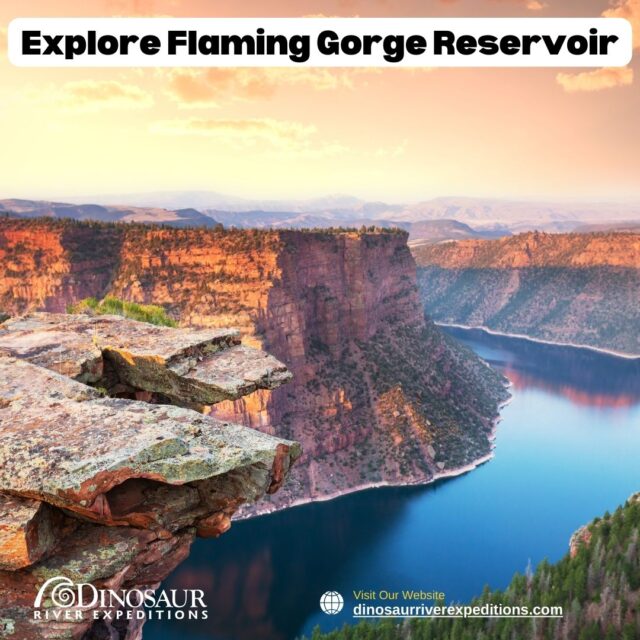
1. Explore Flaming Gorge Reservoir

Boating and Water Activities

Immerse yourself in the crystal-clear waters of Flaming Gorge Reservoir, where an array of boating sports awaits. From the adrenaline rush of water skiing to the peaceful glide of paddle boarding and kayaking, there’s an activity for everyone. You can also enjoy jet skiing or simply relax with a fishing line cast into the shimmering lake. Perfect for family gatherings or tranquil solo retreats, the reservoir is the hub of many exhilarating water-based adventures. Embrace the beauty of the great outdoors as the vivid landscapes surrounding the lake create an idyllic backdrop for all your aquatic exploits.

2. Relax at Red Canyon Lodge

Activities and Accommodations

At the heart of Flaming Gorge’s natural beauty lies the charming Red Canyon Lodge, a favorite among tourists and locals alike. It’s the perfect retreat from the bustle, offering a variety of activities that cater to all interests. Try your hand at horseback riding through scenic trails or enjoy the serene atmosphere while fishing in the private trout lake. The lodge provides rental paddle boats for a leisurely float or the chance to explore on the water.

For a longer stay, choose from cozy accommodations available year-round. The Alpine Cabins welcome guests during the spring and fall, while the Ponderosa Cabins are open throughout the year. Whether you’re planning a family outing or a solo escape, Red Canyon Lodge promises a refreshing getaway paired with the stunning landscapes of Flaming Gorge.

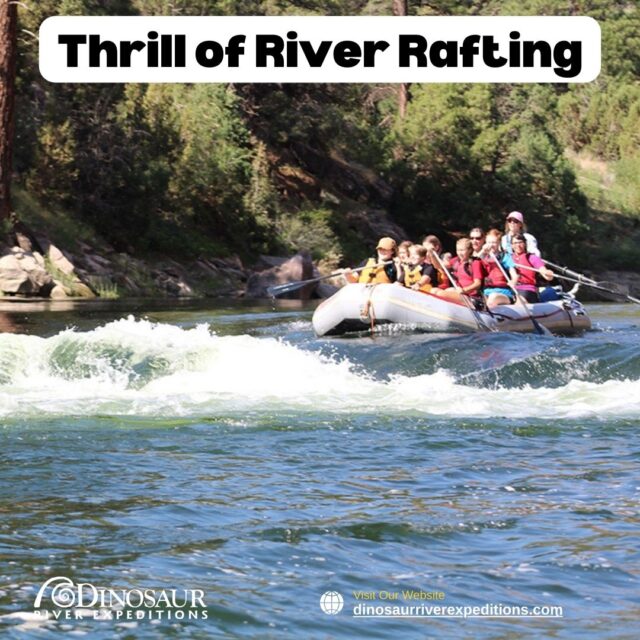
Things To Do Flaming Gorge Recreation Utah3. Thrill of River Rafting

One-Day Rafting Adventure

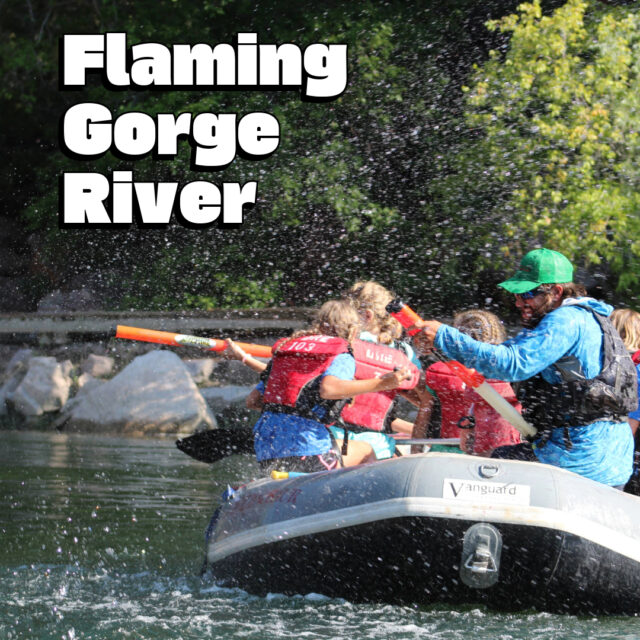
Experience the thrill of a lifetime with a one-day river rafting trip down the Green River, hosted by the expert guides at Dinosaur River Expeditions. Navigate exhilarating class II rapids surrounded by breathtaking scenery, creating memories that will last a lifetime. This adventure is perfect for those seeking an exciting yet accessible introduction to whitewater rafting.

Multi-Day Rafting Trips

Consider a multi-day rafting trip through the Flaming Gorge area for those craving a more extensive adventure. These expeditions offer a spectacular combination of thrilling rapids and tranquil stretches, ideal for seasoned adventurers. The Green River is also renowned for its world-class fly fishing, boasting plentiful trout that will challenge and delight any angler. You’re in for an exciting time on the water with several excellent local guides available.

Book your adventure today and embark on a rafting journey that promises more than just excitement—it’s a chance to connect with nature at its finest.

4. Flaming Gorge Dam Tour

History and Experience

Step into the fascinating history of the Flaming Gorge Dam with a tour that reveals its inner workings. Operating daily from April 15 to October 15, the tour invites visitors to explore for free. Begin with an informative movie and a detailed 3-D display before embarking on a guided walk through the dam’s internal passageways.

The tour culminates with a journey to the base of the dam, where you’ll witness the Green River cascading from the depths of this engineering marvel. The panoramic views are simply breathtaking, offering both educational insights and extraordinary scenery. Whether you’re a history buff or a nature enthusiast, the Flaming Gorge Dam tour is a must-experience highlight of your visit.

5. Hiking and Outdoor Adventures

Popular Trails and Activities

Flaming Gorge is a hiker’s paradise, boasting a wide variety of trails that cater to all skill levels. From the scenic Little Hole Trail to the geological wonders of Moonshine Arch and the lush landscapes of Bear Canyon, each trail offers a unique glimpse into the area’s diverse environment.

Beyond hiking, these trails are also popular for biking, cross-country skiing, and snowshoeing, providing year-round opportunities for outdoor fun. For more adventurous pursuits, consult the Ashley National Forest resources for maps and directions to trailheads. No matter the season or your level of experience, the trails around Flaming Gorge promise adventures that connect you deeply with nature.

Conclusion – Things to Do Near Flaming Gorge Utah

Flaming Gorge Utah is a treasure trove of outdoor activities and natural beauty, offering something for everyone to enjoy. From the adrenaline-pumping antics of whitewater rafting to the serene escapes in the lodge, Flaming Gorge promises memorable experiences that leave a lasting impression. Explore its majestic trails, historical landmarks, and vibrant waterways, and discover why this area is an unparalleled destination for adventurers and peace seekers alike.

Book Your River Adventure

Ready to turn your visit into an unforgettable adventure? Join us at Dinosaur River Expeditions for a thrilling experience with our one-day or three-day Green River Flaming Gorge Trips. Whether you’re a novice looking to dip your toes into the world of river rafting or a seasoned rafter seeking the ultimate multi-day exploration, we have the perfect trip for you. Our experienced guides are ready to lead you through the breathtaking landscapes and exciting rapids, ensuring a journey filled with fun and safety. Book your trip today, and embark on a river adventure that will ignite your spirit and create memories for a lifetime.

FAQs on Things to Do Near Flaming Gorge Utah

1. Is Flaming Gorge suitable for families with children?

Absolutely! Flaming Gorge offers a wide range of activities suitable for families, including gentle hiking trails, serene boating on the reservoir, and family-friendly rafting trips. The area’s varied experiences make it an ideal destination for visitors of all ages.

2. What is the best time to visit Flaming Gorge?

The best time to visit Flaming Gorge is during the late spring, summer, and early fall months, when the weather is mild, and all activities are available. These seasons provide optimal conditions for hiking, boating, and rafting.

3. Do I need prior experience to go rafting on the Green River?

No prior experience is necessary for our rafting trips. Our expert guides tailor the experience to suit all skill levels, ensuring a fun and safe adventure for everyone, including beginners.

4. Are there accommodations near Flaming Gorge?

Yes, Flaming Gorge has a variety of accommodations, including the cozy cabins at Red Canyon Lodge. These accommodations cater to both short and extended stays, making it convenient for visitors to explore the area thoroughly.

5. What should I bring for a day trip in Flaming Gorge?

For a day trip, pack essentials like sunscreen, a hat, comfortable clothing, and sturdy footwear. If you plan to raft or engage in water sports, bring swimwear and a change of clothes. Always check with your guides or lodging for specific recommendations based on your planned activities.

Flaming Gorge Green River rafting


Rafting in Utah: Best River Trips for 2025

Rafting in Utah: Best River Trips for 2025

As I stand on the banks of Utah’s majestic rivers, where I’ve spent countless seasons guiding adventurers through the state’s most breathtaking waterways, I’m excited for the upcoming 2025 rafting season.

Each river has unique charm and challenges, from the serene floats to the heart-pounding rapids. As a seasoned river guide with Dinosaur River Expeditions, I’m eager to share my top picks for the 2025 season.

Whether you’re a seasoned rafter or embarking on your first Utah adventure, this guide is designed to help you experience the ultimate thrill of Rafting in Utah. So, grab your paddle, and let’s dive into the top river trips for 2025!

Utah’s Top Rafting Rivers

  1. Green River
    • Known for: Scenic canyons, diverse wildlife, and exciting rapids
    • Difficulty levels: Class II-IV
    • Must-see: Flaming Gorge, Dinosaur National Monument
  2. Colorado River
    • Known for: Iconic status, stunning rock formations, and challenging rapids
    • Difficulty levels: Class III-V
    • Must-see: Canyonlands National Park, Arches National Park
  3. Yampa River
    • Known for: Pristine waters, breathtaking scenery, and exciting whitewater
    • Difficulty levels: Class III-IV
    • Must-see: Dinosaur National Monument, Mantles Cave

Best River Trips for 2025 with Dinosaur River Expeditions

flaming gorge rafting in utah

1. Flaming Gorge River Rafting

Guided Trip Details – Flaming Gorge

  • River: Green River
  • Duration: 1-3 Days
  • Difficulty: Class II-III
  • Highlights:
    • Navigate the stunning Flaming Gorge
    • Enjoy scenic float sections and exciting rapids
    • Spot abundant wildlife, including bald eagles and deer

2. Gates of Lodore Rafting

Gates of lodore rafting in utah

Guided Trip Details – Gates of Lodore 

  • River: Green River
  • Duration: 4-5 Days
  • Difficulty: Class III-IV
  • Highlights:
    • Conquer the infamous Hell’s Half Mile and Disaster Falls
    • Marvel at the breathtaking Gates of Lodore canyon
    • Experience rich history and abundant wildlife

3. Yampa River Rafting

yampa river rafting in utah

Guided Trip Details – Yampa River

    • River: Yampa River
    • Duration: 4-5 Days
    • Difficulty: Class III-IV
  • Highlights:
    • Explore the pristine Yampa River within Dinosaur National Monument
    • Discover ancient Native American sites and petroglyphs
    • Enjoy thrilling whitewater and serene float sections

Preparing for Your Utah Rafting Adventure

  • Physical Conditioning: Assess your physical abilities and choose a trip that suits your needs
  • Packing Essentials:
    • Quick-drying clothing and layers for changing weather
    • Sturdy shoes and water sandals
    • Sunscreen, hat, and sunglasses
    • Water bottle or hydration pack
  • Safety First:
    • Listen to your guides and follow instructions
    • Wear provided safety gear (e.g., helmets, life jackets)
    • Be mindful of your surroundings and fellow rafters

Utah Rafting: A Seasonal Guide

  • Peak Season (June-August): Warm weather, optimal water levels, and vibrant wildlife
  • Shoulder Season (April-May, September-October): Mild temperatures, fewer crowds, and scenic beauty
  • Off-Season (November-March): Winter landscapes, potential snowshoeing or cross-country skiing opportunities

Insider Tips & Recommendations

utah river rafting insider tipsAs a local river guide, I’m excited to share with you the best ways to complement your Rafting in Utah adventure. Venture beyond the river and uncover the unique charm of our region.
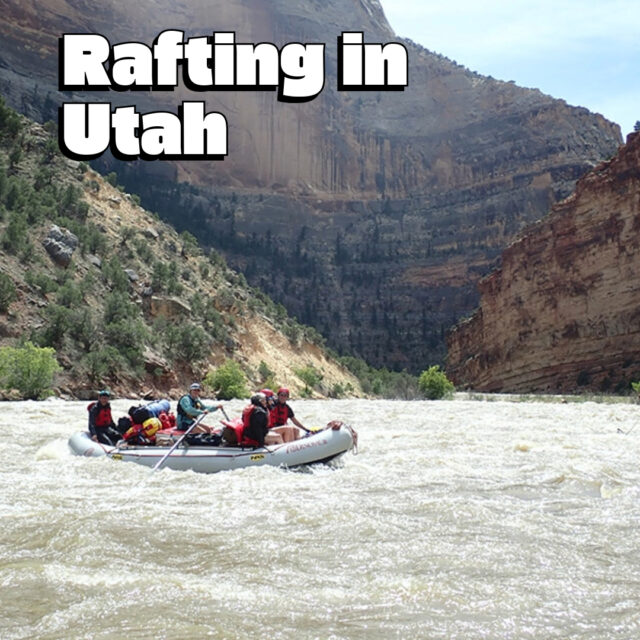
Combine Your Rafting Trip with Nearby Attractions:

  1. Unleash Your Inner Explorer:
    • Hike the Harper’s Corner Trail in Dinosaur National Monument, offering breathtaking views of the Green River.
    • Drive the Scenic Byway 149, winding through the monument’s stunning landscapes.
  2. Experience Small-Town Utah:
    • Visit Vernal’s Downtown Area, where you’ll find quaint shops, restaurants, and a rich history showcased in the Utah Field House of Natural History State Park Museum.
    • Explore the Dry Fork Canyon petroglyphs, a short drive from Vernal, featuring ancient rock art.
  3. More Local Favorites:
    • Red Fleet State Park: A scenic spot for hiking, biking, or simply taking in the views of the surrounding cliffs.
    • Steinaker State Park: Offering additional hiking trails, picnic areas, and opportunities for birdwatching.

Choose the Right Accommodations for Your Utah Rafting Adventure:

  1. Immerse Yourself in Nature:
    • River-side Camping: Spend the night under the stars at one of our recommended campsites near the Green River or Yampa River.
    • Glamping Options: For a more luxurious experience, consider renting a yurt or cabin in the vicinity of Dinosaur National Monument.
  2. Comfort and Convenience:
    • Vernal’s Cozy Lodges: Select from a range of locally-owned lodges, offering warm hospitality and easy access to town amenities.
    • Nearby Hotels: Choose from a variety of hotels in Vernal, providing comfortable stays and convenient amenities for your Utah rafting trip.

Conclusion – Rafting in Utah

Embark on an unforgettable White Water Rafting in Utah adventure with Dinosaur River Expeditions. With this comprehensive guide, you’re ready to explore the best river trips for 2025. Book your spot today and experience the natural beauty of Utah’s top rafting rivers!

rafting in utah


Flaming Gorge River Rafting

A Family Fun Adventure

Introduction to Flaming Gorge River Rafting

If you’re looking for an adventure that combines stunning scenery, mild rapids, and a dash of history, look no further than Flaming Gorge River Rafting. Dinosaur River Expeditions offers an unforgettable, family-friendly rafting experience in the picturesque town of Vernal, Utah. Our Flaming Gorge trips are designed with families in mind, making them the perfect getaway for all ages. Whether you’re a seasoned rafter or a first-timer, this one-day trip will leave you lasting memories.

Flaming Gorge Rafting


Journey to the Flaming Gorge Dam

Starting in Vernal, Utah

The adventure begins in Vernal, Utah, where you’ll meet our enthusiastic team of river guides. From our office, we shuttle north on a scenic drive to the base of the Flaming Gorge Dam. This impressive structure is not only a feat of engineering but also the source of the crystal-clear waters that make this rafting trip so unique.

The Scenic Launch

As we put in just below the dam, you’ll be struck by the remarkable clarity and beauty of the water. The pristine waters flowing from the dam create an ideal environment for a memorable rafting trip. This is where your journey begins, surrounded by the stunning landscape of the Flaming Gorge National Recreation Area.

Flaming Gorge white water Rafting

The Rafting Experience on the Green River

Scenic Route through Ashley National Forest

Once on the water, we follow the Green River south as it winds through the lush landscape of the Ashley National Forest. This 7-mile route typically takes about 3-4 hours to complete. Along the way, you’ll encounter gentle class 1 and 2 rapids like Roller Coaster, Mother-in-Law, and Can of Worms. These rapids are mild enough to be safe for young children but exciting enough to keep everyone engaged.

Water Fun on the River

The calm stretches between rapids provide ample opportunities for swimming and water games, adding more fun to the trip. Our guides ensure a safe and enjoyable experience, making it perfect for families looking to bond over a thrilling outdoor activity. You can also try paddling an inflatable kayak or a stand-up paddleboard, making the adventure more dynamic and engaging.

Activities and Highlights on the River

Exploring and Playing

In addition to rafting, there are plenty of opportunities for exploratory hikes and wildlife spotting. The area is rich with natural beauty, and our guides are knowledgeable about the local flora and fauna. Keep your eyes peeled for sightings of big horn sheep, mule deer, and the birds of prey that frequent the nearby refuge.

Historical Insights

As you paddle along, you’ll pass by the John Jarvie Historic Ranch, a well-preserved site that offers a glimpse into the Wild West history of the region. Our guides will share fascinating stories about the area’s past, adding an educational element to your adventure.

Flaming Gorge River Rafting in Utah

Lunchtime Picnic

Delicious Deli-Style Lunch

Midway through the trip, we drive to a sandy beach for a delicious deli-style lunch. Our guides prepare a spread of fresh and nutritious food, ensuring everyone is well-fed and ready for the journey’s second half. The picnic is a perfect time to relax, enjoy the beautiful surroundings, and enjoy quality family time.

river rafting Flaming Gorge River utah

Trip Logistics and Practical Information

Trip Availability and Duration

Our Flaming Gorge river rafting trips run from late May through August, making them an ideal summer adventure. The trip lasts about 3-4 hours, providing a full day of excitement without being too exhausting for younger participants. If you are interested in a longer trip, check out our Three-Day Flamming Gorge Rafting Trip.

Weather and Water Temperature

In July, daytime temperatures average around 91°F, with cooler nights dropping to about 55°F. In August, daytime temperatures average 89°F, with nights at around 52°F. The water temperature in the Green River stays between 50-60°F, providing a refreshing contrast to the warm summer air.

Essential Items Provided

We provide everything you need for a comfortable and enjoyable trip. This includes high-quality rafts, personal flotation devices (PFDs), waterproof bags, camp chairs, and eating utensils. Paddle rafts and inflatable kayaks are available for participants who want to take a more active role in navigating the river.

river rafting Flaming Gorge RiveR

In Summary – Flaming Gorge Day Trip

The Flaming Gorge Experience

Flaming Gorge River Rafting with Dinosaur River Expeditions is more than just a rafting trip—it’s an adventure that combines natural beauty, family fun, and a touch of history. From the scenic journey through Ashley National Forest to the thrill of navigating class 1 and 2 rapids, every moment is designed to create lasting memories.

Book Now

Whether you’re looking for an exciting day trip or considering our three-day expedition for a more extended adventure, we have something for everyone. Book your Flaming Gorge river rafting trip today and discover why this experience is perfect for families, adventurers, and nature lovers.

Join Us on the Green River

Ready to make unforgettable memories? Learn more about our trips and book your adventure here. We can’t wait to share the beauty and excitement of Flaming Gorge with you!

rafting Flaming Gorge River with us


Craziest White Water River Rafting Destinations and why?

If you love a good adventure, white water rafting may be right up your alley, but not all rafting destinations are created equal. Some are unforgettably thrilling. We asked experienced rafters to weigh in on what they think are the wildest rafting destinations out there. If you’re up for a stomach-dropping adventure, you can get some Bucket List ideas from their responses:

Yoann Bierling

Yoann Bierling

Yoann Bierling is a 34-year-old Frenchman who is passionate about travel. With 4+ years on the road, 55+ countries visited, 650+ flights, 1000+ hotel nights, all self-organized, traveling is his way of life. He completed his first year-long world tour this year and is currently preparing the next one. You can find him here: wcifly.com/en/home

One of the craziest white water rafting destinations is the Mamoni River close to Panama City. You’ll start with a nearly two-hour trip in the local rainforest, driving half of that time on dirt roads in the middle of the jungle and feeling like nobody has been there for a while. When you reach your departure point, it will feel like no other rafting adventure: no base camp and only a little space between the trees to inflate the raft before going on the water.

And then, you’ll get that unique feeling that I never experienced before—even after having been on rafting trips in many countries. It is the feeling of being alone in the middle of the jungle, with no phone signal, miles away from any other living soul that could hear you in case of any issue. In my case, it was only the four of us: myself, another tourist, the guide on the inflatable raft, and another guide on an inflatable kayak.

Every turn felt surprising, as even the guides didn’t know how it would go, not having being there for several days, and the river rapids shifted depending on rocks and water level. We stopped halfway for a lunch right in the heart of the jungle. We ate a few sandwiches on the spot in a place where we could turn our raft upside down on the river banks to use as an improvised table. It was probably my favorite lunch ever, nearly alone in the middle of the jungle, far from civilization, all while having an awesome rafting day.

Hamish Broughton

Hamish Broughton

Hamish Broughton is an independent travel writer and photographer from the United Kingdom. A self-confessed travel addict, Hamish is the creator behind the popular travel blog mytravelfix.com, where he writes passionately about his mis-adventures from around the world.

The Kicking Horse is a 22 km stretch of river that offers some of the wildest white water in the Canadian Rockies. Surrounded by jagged mountains and pine forests, the river is achingly beautiful. However, as the name suggests, rafting down its crystal turquoise waters isn’t always a tranquil experience. While there are plenty of calm sections, Kicking Horse offers some of the wildest and craziest white water that I have ever experienced – the kind that tosses you around like a rag doll on a bucking bronco until your bones feel like silly putty.

Still, though, as I kitted up at the basecamp of the Wild Water Adventures, I was blissfully unaware of the surprise that was in store…

The weather had been fair. It hadn’t rained in a few days, but the water was running strong, spurred on by the glacial meltwater coming down from the mountains. It was cold. Very cold. As I stepped into the raft, I remember seeing the excited, smiling faces of the other adventurers, and I was eager to experience the adrenaline that would soon wash over us. We set off, and after completing some of the fairer sections, we were all in high spirits.

Just as I was beginning to get into the swing of things, our guide pulled us into the bank and asked us to disembark. We clambered up the muddy bank using wet, knotted rope to keep us steady. A path led us up and above the river and out into a clearing. As we neared the bank, the noise began to build. As we approached the cliff edge, the water was deafening. What had once been a calm pool now gave way to a raging torrent of seething white

And there it was: The Terminator, a gigantic breaking wave of water, rising up from the river’s seething surface six feet in the air before crashing back in on itself and repeating the process.

“We’re going over that thing?” I remember asking. The slow nod from the guide was clear – yes. Now, I’ve been white water rafting in rivers all over the world from Slovenia to Laos, but I’d never seen a single obstacle look more menacing and impassable than The Terminator. Gingerly, though, we clambered back into our rubber rafts and shakily pushed off back into the eddy.

As we floated around the meander, the familiar rushing sound of broken water began once more. It must have been a class 5 at least. We started to tear through the rapids, being tossed this way and that. There, right in the center, was The Terminator. We were heading straight for it. It seemed even more gargantuan than it did from the bank. We would flip the raft for sure! “Surely, there’s no way over that,” I remember thinking.

As we came close, everyone in the raft braced for impact, as if they were waiting for a heavy stone to be dropped on them from a great height. Then, right at the last second, our guide flicked his ores and steered us into a hidden current that swept us blissfully past Terminator and onwards down the rapids, unharmed. He’d known it was there all along! An audible sigh emanated from the raft. We all genuinely thought we were goners.

Kicking Horse River is the spiritual home of many white water adrenaline junkies, and it’s easy to see why. I never came so close to the watery disaster as I thought I did when faced with The Terminator (despite the obvious wind-up from our guide). It was truly a crazy experience. Should you go to Kicking Horse yourself, watch out. The Terminator will still be there waiting for you! I think I’ll stick to my paddleboard from now on.

Melanie Musson

Melanie Musson

Melanie Musson is a writer for Insurantly.com. She lives in Montana and has rafted several great stretches of white water.

Bear Trap Canyon Madison River. There are a couple of distinctive features about this stretch of white water that makes it crazy and awesome. The river flows out of Ennis Lake and funnels through a deep-walled canyon. The “kitchen sink,” a class IV (or higher, depending on flow) rapid, is the highlight of the run and will get your adrenaline running.

Another feature that makes this stretch of white water crazy is that it’s so secluded. You may not even see another raft, and there aren’t any paralleling roads. Cliffs rise on both sides of the river and wildlife abounds. Big horn sheep and mountain goats frequent the area, as do bears.

Mikael Uusitalo

Mikael Uusitalo

Mikael Uusitalo is the founder of Swedish outdoor marketplace Thrillism.com

Spring in the Swedish Laplands offers some of the best conditions there are for white water rafting. The snow is melting, and the rivers are filled with wild water travelling down the barren alpine fells.

Some of the best ‘forsränning’ can be experienced in the Kukkola white water. Kukkola is part of the Torneå River located in Haparanda in the very northeast of Sweden.

The Kukkola white water is the crown jewel of the area called Torneå. It offers 3.4 kilometers of white water in cultural surroundings where fishermen have worked for thousands of years and the reindeer roam free.

Landia Davies

Landia Davies

Landia Davies was born and raised in South Africa. Landia is a nature-loving African travel writer with a lively sense of adventure. Her passion for the wild places and animals of Africa inspires her to keep exploring, learning and giving back. Find her at africanbudgetsafaris.com

The wildest one-day white water rafting adventure in the world—that’s what they call a day of running rapids on the mighty Zambezi River downstream of Victoria Falls. Prepare to run more than 20 rapids in a single adrenalin-pumping trip down Batoka Gorge, where you’ll take on high-volume Grade 5 rapids with spine-chilling names like Boiling Pot, Oblivion and Stairway to Heaven.

This is one of the craziest white water rafting destinations in the world because it is powered by about 1,000 to 5,000 cubic metres of water per second pumping over the 108-metre drop at the 1,700 metre-wide Victoria Falls!

The real cherry-on-top is that you’ll be able to combine white water rafting at Vic Falls with bungee jumping or a micro-light flight or helicopter ride or skydiving and plenty of other epic adventure activities around the largest sheet of falling water on earth.

Richard Jeng

Richard Jeng is an adventure traveler, expat and digital nomad from Taiwan. He documents his journey exploring the beautiful country with his blog, biglittleisland.com

For me, it has to be Xiuguluan River in Eastern Taiwan. Though the rapids are manageable, what makes it crazy are the stunning views through the mountainous jungle. The route cuts right through the coastal mountains of the country, and the scenery is mouth-dropping. Definitely one of the most memorable moments of my life.

This is a crowdsourced article. Contributors are not necessarily affiliated with this website and their statements do not necessarily reflect the opinion of this website, other people, businesses, or other contributors.


Protect your Skin: Shining Light on River Guide Wisdom

Nothing can ruin your dream vacation like a bad sunburn.  Not to mention the long-term effects associated with that kind of skin damage.  If you are going on a river trip, then you will be exposed to the elements for anywhere from a day to a couple of weeks so you should plan accordingly.  Your river guides spend all summer being bombarded by solar radiation, so if you should need advice or an example of how to deal with the elements look no further. Having guided the rivers here in Dinosaur National Monument and the local Vernal, Utah area for many years I have gained some valuable insight into sun protection when out in the elements adventuring on these amazing white water rivers.

The iconic image of a river guide may be a bronzed scantily clad emissary of the sun, and it is true that with so much exposure to the sun you will inevitably brown and get some nice tan lines, but I for one am vigilant with applying and reapplying sunscreen.  I use stronger stuff, usually SPF 30 at least.  Look for the multi spectrum coverage, preferably non-greasy and water resistant.  Since its going on my precious skin I also try to go for natural ingredients and therefor end up spending a little more for what I want, but I’m worth it. Goodhouse Keeping put together a great list of the 11 best natural sunscreens for 2019 take a look at their top choices. Besides nice sunscreen I like to use lip balm with an SPF rating as well.  I keep it close and use it a lot. 

Your vestments are your most reliable protection from the sun.  This is your armor.  I like to wear long sleeves, with a collar I can pop up to keep the sun off my neck, and to look good.  This is a business casual ensemble however, with swim shorts and sandals being the lower half.  Just remember to lotion up the bare legs and feet.  Pants made from quick drying fabrics provide a nice break from the sun, when it’s not too hot.  I have also been known to wear leggings for the same purpose.  Fashion and function.  A sarong is another great clothing option for covering the legs and it can double as a beach blanket, light sheet or a warming layer when it cools down a little bit. Our friends at North West River supply have a great collection of river guide approved clothing for sun protection. 

For the love of your face, don’t forget to take a hat.  Maybe take two or three.  You don’t want to be without a hat, and it is a real bummer to lose your only one to the river.  I like to wear a big straw hat most of the time.  Its full wide brim protects more angles covering my face and neck. Tula Hats make some great wide brimmed sun hats in many styles, they are also tough I have worn my almost daily for several summer now. Besides my Huck Finn topper I also take a baseball cap or two.  You must remember that the sun is also hitting you from below as it reflects off the water, so I might also wear a buff or bandana around my neck pulled over my ears.  Another great tool to have in your box is to have a sun hoodie.  They provide great coverage, work well with ball caps, and they look and feel good. 

Now that our skin is covered let’s not forget to shade the all-important windows.  Sunglasses are crucial to your protected persona.  The list of benefits is long.  They make you look good, they cut down on glare making it easier to see the beautiful landscape that you find yourself in, they reduce eye fatigue and the chance of headaches and they decrease your risk for future vision and eye health issues.  Did I mention they make you look good?  The best part is that you don’t necessarily have to break the bank on nice shades as you can find good polarized lenses almost anywhere.  This is also good because sunglasses are another item that you may want to plan for redundancies, lest you lose or break your first pair. 

Now if you have taken this advice you should be doing well, but there are a couple of other tricks to give you an edge in minimizing your solar exposure.  Seek shade when possible.  Lounge under a tree or prepare lunch beneath an overhung cliff.  If space allows then bring a beach umbrella or a shade canopy.  You could always hide in your tent at a layover camp but in the summer, this could be a place of stifling heat.  Instead, carry in your kit a small sheet or piece of cloth that you can cover up with and wet when it is hot this is where that sarong comes in handy.   

Your skin is precious.  It does well to protect you from threats to your health and comfort, but it needs your help.  You must do your part to take care of it and it will continue to take care of you.  You’ll be able to enjoy your dream vacation down the river without the discomfort of a sun burn and you’ll be able to enjoy the peace of mind that your long-term health will see you through many more adventures down the river and around the sun.

We look forward to seeing you on the river.  


Rafting Myth’s

If you type “whitewater rafting” into You Tube, any number of videos of monstrous haystack waves and major paddle raft carnage will probably show up. The top 10 searches usually contain a paddle raft with eight people being absolutely annihilated, or a single boatman, one moment gripping the oars and in the next completely washed away. While this sort of whitewater rafting asks for a somewhat fearless mindset and an aptitude in body and mind, it is by no means the rule of a rafting trip.

In actuality, a river trip is the perfect setting for people of all ability levels. No really. Here, let me walk you through it. Say it’s a family reunion. Grandma and grandpa, a smattering of nieces and nephews ranging in age from five to starting college, your brother – an avid fly fisherman – and his wife, more the urban socialite than the outdoorsy type. Grandma and grandpa can enjoy the serenity of the water and take in the stunning sights all from the comfort and ease of a stable raft – no paddling on their part required. Little Sally and the younger children can jump in and out of the water, collect sand from every beach on every part of them, while the older kids can challenge themselves on the side hikes and – guides allowing – take on the rapids in inflatable kayaks or even try the hands at the oars (again, guides allowing). Finally, at camp, your sister-in-law can enjoy an iced beverage (no joke) and a warm gourmet meal with a side salad (again, no kidding) and brother bill can fish from the bank to his hearts content.

Still skeptical? Maybe you’re worried about something else. Perhaps you’re thinking your guide will be some craggy bearded man, a beer or cigarette a constant fixture in his hand? Think again. These days your typical guide is much harder to pin down. Some are music teachers, others are college students of one discipline or another. Sure, there’s plenty of ski patrollers and ski bums who make rafting their summer job, but they are by no means all dudes. Girls are guides, and serious fan favorites – just ask little Sally or grandma and grandpa.

Still worried? Worried, perhaps, that you won’t be able to bring that absolute necessity? Won’t be able to pack all the clothing to stay warm, dry, cool, and stay fashionable? Let me assure you, your worries are in vain. A rafting trip is like car camping without the crowds, the noisy cramped campsites, or the wet dogs or bored children in the car. Camp has nearly all the amenities of home, even the kitchen sink (no seriously). Granted, the toilets may not flush, but they have the best views of any water closet you’ll ever use. So throw that sports coat or sleek black dress in a waterproof bag (provided by your outfitter) and enjoy a cocktail on a remote river beach.

A river rafting trip whether it is a one day Utah river rafting excursion on the Green River below Flaming Gorge Dam or a multi day adventure rafting Colorado’s world famous Yampa River or Green River Gates of Lodore is an absolute treat. A vacation of a lifetime and something the whole family will remember and want to do again and again each summer.

We offer Utah one day rafting trips on the Green River from Vernal, Utah. Also 4 and 5 day Colorado rafting trips on the Yampa River and Green River through Dinosaur National Monument. Debunk the myth’s and come raft Colorado and Utah with us today.


River Rafting Safety Tips

Whitewater Rafting Safety Tips:

For one day or five whitewater rafting is one of the best ways to cool off in the summer heat for people of all ages and experience levels.  That’s right, everyone! In the last 30 years, rafting has grown out of its wild and risky days into a family friendly activity. The invention of new safety gear and a better understanding of whitewater has helped the industry mitigate the risks of rafting. On a guided rafting trip the staff will orient you with a solid safety speech at the put in before launching on your one day or multi day river adventure. Whether it is a Utah one day raft trip on the Green River below Flaming Gorge or a 4 or 5 day white water adventure on the Green River or Yampa River through Dinosaur National Monument keep in mind you are potentially far from advanced help. Your guides are trained, certified and licensed but some injuries are beyond their medical training. Being mindful of your actions and thinking safe are key on a river rafting trip. Here are the basic measures you should take for every whitewater trip.

  • Wear a properly fitting PFD

PFD’s, or life jackets, are the most important piece of equipment in white water rafting. Yes, even more vital than the boat, paddles, or guide.  It is a hard rule: do not go on river without a PFD.  Unlike lakes or oceans, river water churns chaotically in rapids. Eddies form confusing whirlpools that suck straight down, diagonal waves kicking towards canyon walls, and holes circulate water on themselves creating stationary pockets of water within a system of movement.  Fortunately, a snug PFD will remove your need to navigate through this chaos, bringing you thoughtlessly to the surface

The vest should be tight against your chest and shoulders with all the buckles clipped. It shouldn’t come above your ears when you tug on the lapels. The jacket will loosen up over time and when its wet, so be sure to tug on your straps throughout the day and have a guide check that its fitted correctly.

  • Be mindful

The majority of river trip injuries happen on shore not on the river. Be aware of your movements getting on and off the boats and at camp, hiking stops or lunch. It’s easy to twist an ankle, accidentally slice your hand on a dinner knife, or get a burn from boiling water. Slow yourself down, the river isn’t a race. It will save a lot of havoc if you take a breath before swirling around with a knife in your hand.  Also, remember that drugs and alcohol decrease your body awareness and increase the potentially for a clumsy accident. The best way to combat shoreline injuries is simple, pay attention.

  • Dress to the day

Temperature injuries are some of the most common on the river. In the spring, cold air combined with cold water creates a very real hypothermia threat; and in the summer, the reflective water doubles your sun exposure, increasing the risk for heat stroke. Make sure you check the weather forecast for a general idea of what you should be prepared for going into your trip. If its spring, bring an extra fleece, rain jacket and pants to help fend off the splashing cold water.   In the summer, bring a brimmed hat, sunglasses, and even lightweight long sleeve shirts and pants for sun protection.  In both cases, make sure you are hydrated and well nourished, fulling your body properly helps give it the strength you need for thermoregulation.

  • Swim Properly

Similar to the proper use of a life jacket, swimming correctly in the river can help you conserve energy and avoid unnecessary risk. Use the defensive swimming position, floating on your back, looking downstream with your toes out of the water. Although it is an instinct to stop your motion by standing up, this is one of the more dangerous moves on the river.  The water is stronger than you, and stopping your momentum is unlikely. It’s best to swim actively towards a raft or use the “noes and toes” defensive swimming position. Remember not to panic, the rapid won’t go on forever.

  • Speak Up

Much of rafting safety is in your control. Guides are doing everything they can to keep you safe, but a large portion is in your hands.  If you are uncomfortable with going on a certain section of a hike or don’t want to take an inflatable kayak down a rapid, that’s okay! Just let a guide know that they will help you. The guides are there to keep you safe.  Even if you are cold, hot, thirsty or have a minor cut, let someone know. It’s much easier to combat many small problems than one big one.


Rafting safely is all about small actions that prevent large catastrophes. Don’t skimp on the easy stuff and have fun!


White Water Rafting Things To Consider Before Your Trip

Whitewater Rafting Things to Consider Before You Go

Whitewater rafting in Utah and Colorado can be one of the most fulfilling and enjoyable summer activities; natural beauty, thrill, human connection and a quick way to cool off in the summer heat. But river rafting isn’t a carefully constructed Disneyland waterpark, rivers are subjects of nature. Here are some ways to help you prepare for the trip, whether it’s a Utah one-day river rafting trip on the Green River or a four to five-day raft trip through the heart of Dinosaur National Monument.

First things first. Always, always, always bring a rain coat. Yes, A rain coat. I know what you are thinking, my river trip is in the desert and I checked the forecast. No rain. Well trust me, river canyons tend to take on their own climate. The weather on the river can be vastly different from the nearest town or even 20 miles downstream. The storms in the desert also typically come in quickly and hard, sometimes for hours at time. I know its glamping, but you will still be outside for the duration of the storm so make sure you bring a raincoat that will keep you dry through the storm. Plus, we’re not backpacking, so you don’t have to carry your extra weight.  Just bring it. A good quality rain jacket is also a perfect layer for chilly mornings or evenings around the camp.

Along those lines, you will be outside for the whole time, so, if your trip is for a day or a week make sure you bring a good water bottle that can hook to the boat. Being on the water all day means you are getting double the sun, making it that much more important to stay hydrated.  Dehydration can lead to headaches, nausea, vomiting and general anger. Yep, drinking enough water will keep you happier making your vacation more enjoyable for everyone.

It’s nice to feel the vitamin D sink into your skin for a few hours at a time, but again, you are talking about exposure from sun up to sun down out on the river. Sunscreen and sun protection is very important. Nothing ruins a great vacation like a sunburn. Bring a high-quality sunscreen that you apply often throughout the day. Clothing is also great sun protection. A long-sleeved sun shirt, hat with a brim, sunglasses are all helpful for tackling the summer sun.

Now that you are protected from the elements, remember that people are operating these rafts.  There are no tracks to keep them in exactly the right place in the water, no seatbelts, and no airbags.  While being connected to the earth is part of the beauty of rafting, it also comes with an inherent risk. Don’t worry too much, your guides are trained in not only how to operate the raft, but in wilderness medicine and swift water rescue. The thing you should remember is that they are doing their absolute best and they are trained for an incident if it occurs. Pay close attention to the guides safety speech, listen to their directions and you will have a fabulous trip.

Lastly, remember there might be more to your trip than just the river. Many river trips have beautiful side canyons, archeology, and hiking to explore while you are not on the boats. This can be some of the most memorable experiences and often people leave saying it was their favorite part. Come prepared with good shoes, substantial water bottle, sun protection and be open to your trip evolving into the unexpected. The best trip of your life might not be what you were expecting. Be open to trying new things and connecting with the other passengers.

Now that you’ve got all the details! Let’s go boating!


White water river rafting in Utah and Colorado 5 amazing canyons

5 Best Canyons to White Water River Raft in Utah and Colorado:

  • The Yampa

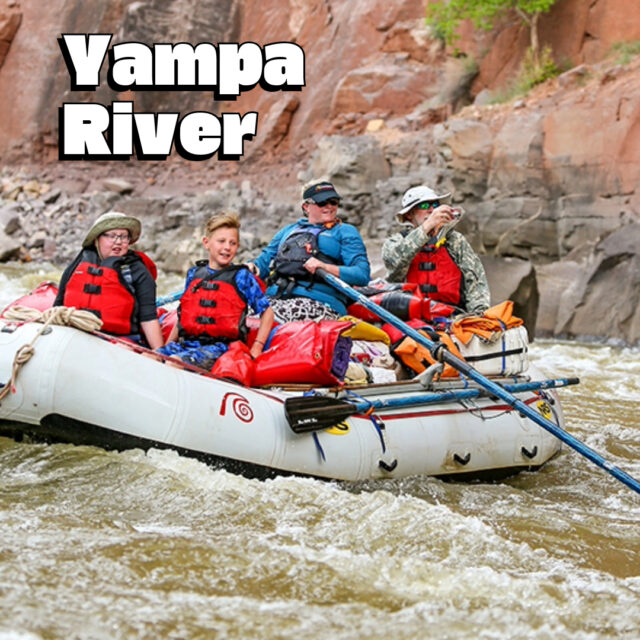
The Yampa River Canyon, sometimes referred to by as a “little Grand Canyon” is potentially the most beautiful place in the state of Colorado. Located just a short distance outside of Vernal, Utah, the Yampa River is an amazing combination of peaceful flat water and big rapids. The bigger rapids are sure be a thrill at any level sending water over your head throughout the trip.  The biggest rapid, Warm Springs is one boaters talk about all over the country. The flat water gives you time to explore the waters on paddling your a paddle board or inflatable kayak. Paddling solo truly gives you a feeling of the wilderness and  isolation of the canyon. At night, the campsites are typically big beaches perfect for a game of beach volleyball, kids to play, or just enjoying the firelight with the company of your family and friends.

The 700 foot tall white sandstone walls act as a time machine, sending you back a 1,000 years when the Fremont native Americans called the canyon home. Unlike most western rivers the Yampa is free flowing, meaning it looks almost exactly as it did 1,400 years ago. The trip has many stops where you will be able to see 800 year old petroglyphs, ancient storage granaries and maybe a little wildlife like mule deer or bighorn sheep. Beyond the native history, the canyon is a cornerstone for environmental history, at the center of the first ever grassroots environmental movement. This also makes it one of the most competitive private river permits to get in the US.

This canyon truly has it all, epic whitewater, peaceful flatwater, stunning geological landscapes, and history dating back thousands of years.  It’s hard to travel through this canyon and not be simply overwhelmed by it beauty.

Confluence in Echo Park
.

The Yampa River may be tops on this list but the Green River Gates of Lodore takes a tight number two spot. Both trips are unbelievable and either one is spectacular depending on the time of year you can go rafting. The Powell expedition was one of the first to stare awestruck at the Gates of Lodore on the Green River with a mix of fear and enthusiasm. Today, the reaction to the dark red sandstone at the beginning of the canyon is the same no matter who rafts through the gates of lodore. The aw only escalates upon learning that it is the oldest rock in Utah and Colorado, dating back almost a billion years, predating life itself. The stunning views are matched with amazing white water. At high water (5-9,000 CFS), you are signing up for a “hold on tight” sure to find a thrill adventure and at lower water a family friendly continuous splashy 42 miles.

  • Cataract Canyon

This is the place to go if you are looking for massive rapids. Just outside of Moab, Cataract Canyon is home to the biggest whitewater in Utah and at high water, the biggest rapids on the Colorado river.  At anything above 20,000 CFS (Cubic Feet per Second) three biggest rapids turn into one long whitewater ride, so don’t worry about the desert heat, you are sure to get wet.

  • Split Mountain

A beautiful stretch of canyon if you are just looking for a day of rafting. This section of river is the last 9 miles of a Green River Gates of Lodore or Yampa River trip through Dinosaur National Monument. The mouth of the canyon gives it the name, as it appears the river is cutting the mountain it half. Multiple layers of rock bend and twist here giving it an other worldly look. The rock formations drip and twist the whole way down the canyon allowing for a common game of “what shapes can you see in the rocks,” in between the fun class 2 and 3 rapids. Remember to ask your guide about the Pirate watching over you in the second half of the river!

Split Mountain on the Green River


  • Desolation and Gray Canyon

Knock out two canyons in one river trip with this 84 mile float. The Gray/Deso combination is a beautiful river trip in eastern Utah with great views and fun class 2-3 rapids and an abundance of native American history, wildlife and spectacular Utah River Rafting scenery.


X