Yampa River Trip: Best time to raft the Yampa river

Yampa River Rafting in Dinosaur National Monument

Short answer: A Yampa River rafting trip runs through Dinosaur National Monument on one of the last major free-flowing rivers in the Colorado River system. You put in at Deerlodge Park and float about 71 miles to Split Mountain over four or five days. Along the way you pass Tiger Wall and run Warm Springs Rapid, and at Echo Park the Yampa joins the Green, so you raft two rivers on one trip.

See what a Yampa River trip looks like from put-in to take-out.

What Makes a Yampa River Trip Different?

The Yampa is the longest free-flowing tributary in the Colorado River basin, which means no upstream dam controls its flow. The river rises and falls with the snowmelt, so every season feels a little different and the canyon keeps a real sense of wildness.

Here is the part most people do not expect. The Yampa does not end at a take-out. It meets the Green River at Echo Park, below the landmark called Steamboat Rock. From there your trip continues on the Green through Whirlpool Canyon and Split Mountain Canyon. You start on one river and finish on another, all in the same trip.

The National Park Service runs both the Green and the Yampa through this monument, and you can read their overview on the Dinosaur National Monument river rafting page.

Key Takeaways

  • The Yampa is free-flowing and snowmelt-driven, so the season is short. Most trips run May through June.
  • The route covers about 71 miles from Deerlodge Park to Split Mountain, usually over four or five days.
  • You raft two rivers in one trip. The Yampa joins the Green at Echo Park.
  • Water is mostly Class II and III, with one Class IV at Warm Springs Rapid.
  • The put-in is about a 90-minute drive from Vernal, Utah.

Where Does the Trip Go? Deerlodge Park to Split Mountain

The trip puts in at Deerlodge Park in northwest Colorado and takes out at Split Mountain in Utah, a run of roughly 71 miles. The Yampa carries you about 46 miles down to Echo Park, where it pours into the Green River.

The canyon changes character as you go. The first stretch is open desert that quickly narrows into a box canyon. By the third day the rock formations reach their high point at the Grand Overhang and Tiger Wall, a sheer sandstone cliff streaked with dark desert varnish. After the confluence, the combined rivers push through Whirlpool Canyon and the rapids of Split Mountain Canyon before the boat ramp.

Rafting through the canyons of the Yampa River in Dinosaur National Monument
Towering canyon walls line the Yampa for most of the trip.
Yampa River trip at a glance.
Detail What to know
Put-in Deerlodge Park, Colorado
Take-out Split Mountain, Utah
Distance About 71 miles
Trip length 4 or 5 days
Whitewater Mostly Class II to III, one Class IV (Warm Springs)
Season Typically May through June
Drive from Vernal About 90 minutes to the put-in

What Are the Rapids Like?

Most of the Yampa is friendly Class II and III water, with one standout: Warm Springs Rapid, the only Class IV on the trip. A 1965 flash flood washed a debris flow into the river and built the rapid you run today. Its main feature is a churning hole called Maytag near the bottom, which guides line up to avoid.

Warm Springs sits below the biggest cliff on the trip, so the setting matches the moment. American Whitewater describes the run and the river in its Dinosaur National Monument Yampa listing. Your guides scout the rapid before you run it, and they will walk you through the plan.

White water rafting a rapid on the Yampa River
The Yampa mixes calm floating with splashy whitewater.

When Can I Go Rafting on the Yampa?

The Yampa season is short and runs mostly from May through June. Because no dam holds back the water, the river depends on mountain snowmelt. Spring brings the biggest, most exciting flows, and the water tapers off as summer sets in.

That short window is the trade-off for a wild river, and it is the main reason to book early. If you want help picking the right weeks, see our guide to the best season for river rafting in the monument.

How Many Days Is the Trip: 4 or 5?

We offer the Yampa as both a four-day and a five-day trip. Both cover the same 71 miles. The difference is pace.

The five-day trip gives you more time off the water for side hikes, longer lunches, and slow mornings in camp. The four-day trip keeps things moving and works well if you have less time to spare. Families and first-time rafters often like the extra breathing room of five days, but both are a good fit for newcomers.

Who Is the Yampa Trip Good For?

The Yampa is one of the better multi-day rivers for first-timers and families who want real whitewater without nonstop intensity. Most days mix calm floating, a few splashy rapids, side canyon hikes, and nights camped on sandy beaches. You do not need rafting experience. Your guides handle the rowing, the camp setup, and the meals.

Rafters enjoying a guided multi-day trip on the Yampa River
Guides handle the rowing, camp, and meals so you can soak it in.

Planning to spend more time in the area? Our area information page covers what to do around Vernal and the monument before and after your trip.

Yampa vs Gates of Lodore

If you are weighing trips, the main difference is the water source. The Yampa is free-flowing with a shorter snowmelt season, while the Green River through the Gates of Lodore is dam-controlled with a longer, steadier season. Pick the Yampa for the wild, two-rivers experience and the spring water.

Frequently Asked Questions

Is the Yampa River dam-free?

Yes. The section through Dinosaur National Monument is free-flowing, with no major upstream dam controlling it. That is why flows change naturally through the season and why the river feels so wild.

How long is the Yampa River rafting trip?

The run from Deerlodge Park to Split Mountain is about 71 miles. We offer it as a four-day or five-day trip.

Do I need rafting experience for the Yampa?

No. The Yampa is mostly Class II and III water with one Class IV rapid at Warm Springs. Guides row the boats, scout the rapids, and handle camp, so first-timers and families do well here.

When is the best time to raft the Yampa?

Most trips run May through June, when snowmelt feeds the river. Spring offers the biggest flows. Because the season is short, dates fill up early.

How far is the put-in from Vernal?

The put-in at Deerlodge Park is about a 90-minute drive from Vernal, Utah.

Reserve Your Yampa River Dates

The Yampa season is short and trips book up fast. Lock in your spot for a four-day or five-day adventure through Dinosaur National Monument. Reserve your Yampa River dates today.


Endangered Fish of the Colorado River System

The Green and Yampa Rivers are home to many species of fish, but there are a few that are particularly endangered or at risk of becoming endangered. These species are facing a variety of threats, including habitat loss, pollution, and overfishing. Here is a closer look at some of the most endangered fish on the Green and Yampa Rivers:

  1. Colorado pikeminnow: This species of fish is native to the Colorado River system, which includes the Green and Yampa Rivers. It is listed as endangered under the Endangered Species Act and is considered one of the most endangered fish in North America. The Colorado pikeminnow is threatened by habitat loss and degradation, as well as non-native species that compete for resources.Green and Yampa Rivers
  2. Razorback sucker: The Razorback sucker is another species of fish native to the Colorado River system that is listed as endangered. It is a large, bottom-dwelling fish that is known for its distinctive, humped back. The razorback sucker is threatened by habitat loss and degradation, as well as the introduction of non-native species that compete for resources.
  3. humpback chub: The humpback chub is another endangered species of fish native to the Colorado River system. It is a small, sleek fish with a distinctive hump on its back. The humpback chub is threatened by habitat loss and degradation, as well as the introduction of non-native species that compete for resources.
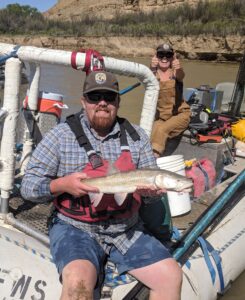
  4. bonytail chub: The bonytail chub is another endangered species of fish native to the Colorado River system. It is a large, silvery fish with a distinctive bonytail. The bonytail chub is threatened by habitat loss and degradation, as well as the introduction of non-native species that compete for resources.

There are many efforts underway to protect and preserve these endangered species of fish on the Green and Yampa Rivers. These efforts include habitat restoration projects, the introduction of non-native species that are less damaging to native fish populations, and the implementation of regulations to limit overfishing. It is important that we take action to protect these species, as they are an integral part of the ecosystem and play a vital role in the health and well-being of the Green and Yampa Rivers.Green and Yampa Rivers
There are several reasons why this information is important to river users. First, it is important to be aware of the species that are present in the rivers and their conservation status because it can impact the types of activities that are allowed or restricted in certain areas. For example, if a certain species of fish is endangered, there may be regulations in place to protect that species, such as catch limits or restrictions on boating or fishing in certain areas.

Second, it is important for river users to be aware of the endangered species present in the rivers because these species play important roles in the ecosystem. For example, the Colorado pikeminnow is a top predator in the Colorado River system and plays a vital role in maintaining the balance of the ecosystem. The loss of this species could have cascading effects on the entire ecosystem.

Third, protecting endangered species can help to preserve the biodiversity of the Green and Yampa Rivers. Biodiversity is important because it helps to ensure the health and resilience of the ecosystem. A diverse range of species can help to protect against the impacts of environmental changes, such as drought or pollution.

Finally, protecting endangered species can have economic benefits as well. Many people rely on the rivers for recreation, such as fishing, boating, and rafting, and the presence of endangered species can attract tourists and support local economies.Endangered Fish of the Colorado River System

Outdoor Recreation Classes Through Schools

Why Schools Should Include Adventure Sports Activities In Their Curriculum

Sir John Lubbock once stated, “Earth and sky, woods and fields, lakes and rivers, the mountain and the sea, are excellent schoolmasters, and teach some of us more than we can ever learn from books.” This statement is more true now than ever.  Today’s society has lost this form of education through time and often only relies on a curriculum based in a classroom setting. The lack of these learning adventures is limiting the growth and knowledge that is only experienced through experiences in nature. Many educators are unaware of the numerous benefits that can be attained  through adventure sports activities. Students often are unable to see how the classroom lessons of biology, chemistry and many other topics have to do with the real life outside world. There is no better way to understand a lesson or a topic than using a hands on experience. Outdoor adventures will not only be fun and exciting but will allow an excess of both worlds to come together. The classroom will forever be changed as soon as students are able to see the science come to life. 

Our local high school Uintah High, offers an incredible outdoor recreation program taught by Mr. Hoffart. Hoffart has designed a unique curriculum based on his experiences and time as a student at NOLS (National Outdoor Leadership School) as a student. Through these prior experiences Mr. Hoffart teaches his students a multitude of skills that will help them pursue their own outdoor adventure sports. Some of the students favorite subjects taught are backpacking, fishing, mountain biking and white water rafting. The white water rafting trip is sponsored by Vernal, Utah’s locally owned and operated Dinosaur River Expeditions. Dinosaur River takes the students and staff on their one day Green River rafting trip. Dinosaur’s philosophy is we need to foster and provide recreational options for the community’s youth, these students need to know and see what is in their backyard. Not only does the course teach specific skills but provides an introduction to preserving open space and leave no trace ethics while exploring the great outdoors. The outdoor recreation class at Uintah High School is only one example of the many opportunities that are available for youth to get outside classroom and learn new and valuable skills.  

Not only are there academic benefits to these adventures, but emotional and social benefits increase tremendously as well. Being able to connect with the outdoor world allows an abundance of stress to be taken away. Studies have shown that most students develop high levels of stress very early in life. With these high levels of stress there are minimal healthy outlets to help relieve themselves. Providing a class in an outdoor setting will teach the students a coping method that can be used not only during school but throughout their lives. The students emotional health increases as stress is taken away as well their self esteem grows throughout the process. Being able to attend these classes allows the student to learn new skills, become more confident in their own abilities, and increase their emotional health and wellbeing as well. The social aspect built upon in these adventures can become life long friendships. Throughout adventuring, there comes times when the answer is not as easy as 2+2 but takes problem solving. Trying new things and working together as a team with their peers starts to help their social abilities flourish. This learned attribute can be used in the workforce later in life as they start working with different coworkers, providing customer service, working through challenging situations that are experienced in the workplace.

One of the most important factors that these adventure sports activity classes will teach students is the importance of the environment. The lack of education on the environment is what causes the problems that the world faces today, such as waste, the lack of preservation, and minimal conservation. Teaching students the magnificence that the world has for them starts with taking care of the environment around them. The list of positives goes on and on for these classes to be added to a regular curriculum. The change needs to be made for future generations to understand the importance of our wild spaces and the need to protect and preserve open space.  

If your child’s school offers an outdoor recreation program take advantage of the incredible doors it will open through a classroom based in nature. If not take a look at programs in your area that may provide the skills to help your child grow in ways the classroom cannot provide. 


X
BOOK NOW