What Makes the Yampa River Special: The Last Wild River Through Dinosaur National Monument
 In the American West, every major river has been tamed. Dams control their flows, reservoirs store their water, and concrete channels direct their paths. Every river except one.
The Yampa River flows wild and free, exactly as it has for thousands of years. As the last undammed tributary of the Colorado River system, it represents something increasingly rare in modern America: genuine wilderness that exists on its own terms.
For 72 miles from Deer Lodge, Colorado to its confluence with the Green River at Echo Park, the Yampa carves through some of the most spectacular canyon country in North America. This isn’t just another rafting trip, it’s a journey through living history, untouched ecology, and landscapes that few people will ever experience.
Understanding “Undammed”
When we say the Yampa is undammed, we’re not just noting a technical detail. We’re describing an entirely different kind of river.
Dammed rivers flow on human schedules. Water releases match power generation needs or irrigation demands. Flows remain relatively constant regardless of season. The ecosystem adapts, or dies trying, to this artificial rhythm.
The Yampa follows natural patterns. Spring snowmelt creates powerful floods that reshape sandbars and scour side canyons. Summer brings lower, clearer flows. The river rises and falls with weather patterns, just as it has for millennia. This natural variability sustains a complex ecosystem found nowhere else.
For rafters, this means something profound: you’re experiencing a river as it was meant to be. The Yampa hasn’t been engineered for convenience. It’s wild, unpredictable, and authentic in ways that most modern wilderness experiences can’t match.
The Journey: 72 Miles Through Time
Your Yampa River expedition begins in Deer Lodge, Colorado, a remote put-in that sets the tone for everything that follows. From the moment you push off shore, civilization fades behind you.
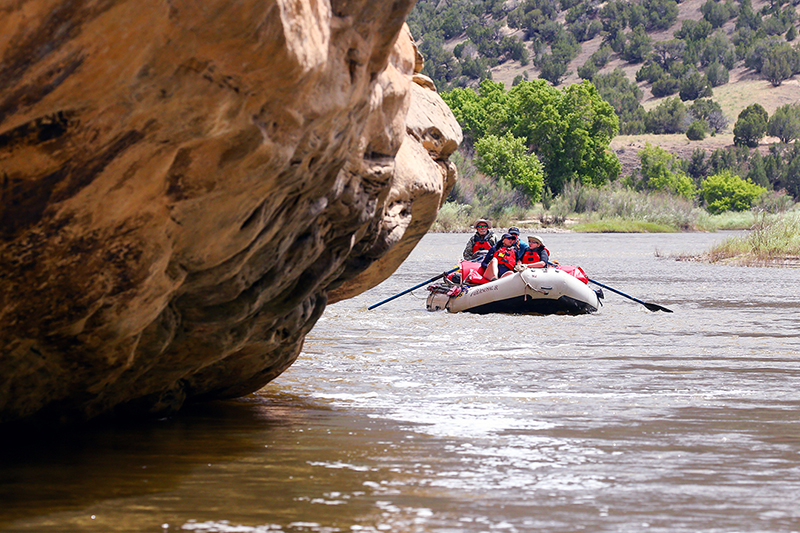 Days One and Two: Building Anticipation
The first couple of days feature gentler rapids and stunning scenery as you travel deeper into Dinosaur National Monument. Towering sandstone cliffs display millions of years of geological history in horizontal bands of color. Ancient Ponderosa pines cling to impossible ledges.
This is when you settle into river time, a different rhythm from daily life where sunrise and sunset matter more than clock hours. Morning camps feature elaborate breakfasts prepared by guides. Afternoons bring swimming in clear pools, short hikes to overlooks, and lazy drifting through calm sections.
Wildlife appears constantly. Bighorn sheep navigate sheer cliff faces. River otters play in eddies. Eagles soar overhead while great blue herons fish in shallows. Because the Yampa’s flows remain natural, these animals follow ancient patterns undisrupted by human management.
The Rapids: Challenge and Thrill
The Yampa delivers world-class whitewater without requiring expert skills. Rapids arrive regularly enough to keep things exciting but not so constantly that you feel overwhelmed.
Warm Springs Rapid stands out as the crown jewel, a Class III to IV rapid that commands respect. Your guides will scout it from shore, choosing the optimal line based on current conditions. The subsequent run delivers pure adrenaline: big waves, serious hydraulics, and the thrill of navigating genuine wilderness whitewater.
Other notable rapids include Big Joe, Little Joe, and Teepee, each with distinct personalities. Some feature standing waves that drench everyone aboard. Others require precise navigation around rocks and holes. All remind you that this river plays by its own rules.
Ancient Connections: Petroglyphs and Archaeological Sites
What truly distinguishes the Yampa are the archaeological treasures hidden in its side canyons. Your guides lead hikes to sites most people will never see.
Seven hundred years ago, Fremont people created petroglyphs on canyon walls, intricate images of bighorn sheep, geometric patterns, and human figures. The isolation of these sites, combined with the dry desert climate, means they’ve survived virtually unchanged.
Standing before these ancient artworks, you connect directly with people who traveled this river centuries before modern rafts existed. They fished these same pools, camped on these same beaches, and gazed up at these same cliffs. The Yampa’s undammed status helps preserve these sites by maintaining natural erosion patterns rather than accelerating damage through artificial flood cycles.
Guides explain the significance of what you’re seeing, the cultural context, the artistic techniques, the theories about meaning. This educational component transforms historical sites from interesting stops into profound connections with the past.
Camp Life on the Yampa
If the river days are spectacular, Yampa camps are otherworldly. Because the river remains free-flowing, sandbars and beaches shift naturally, creating pristine campsites that feel untouched.
Evening at Camp
After a full day on the water, you beach the rafts at carefully selected sites with sweeping views. While you stretch legs and explore, guides transform the beach into a complete camp: kitchen area, dining space, groover (portable toilet) location, and individual tent sites.
Then comes dinner. Don’t expect standard camping fare. Guides prepare elaborate meals using Dutch ovens and camp stoves: fresh salads with vegetables that somehow stay crisp for days, lasagna bubbling under starlight, and legendary peach cobbler that guests rave about in reviews years later.
One guest captured the dining experience perfectly: “The food was varied, well-cooked, ample, and delicious. There were fresh vegetables throughout the trip and what seemed to me like a lavish cooked breakfast every day.”
After Dark
With no artificial light for miles, Yampa camps offer something urbanites rarely experience: genuine darkness. The Milky Way stretches overhead in stunning detail. Satellite passes look like slow-moving stars. Guides point out constellations and share astronomical knowledge.
Around campfires, the entertainment varies. Sometimes it’s storytelling, river tales from seasons past, outlaw history from the surrounding country, or explanations of canyon geology. Other times guides present impromptu skits or organize games. Often it’s just conversation as strangers become friends through shared adventure.
The best moments might be the quiet ones. Sitting on a beach at dusk, watching the light change on canyon walls, listening to the river’s constant song, feeling completely removed from the modern world’s demands.
The Ecology of Freedom
The Yampa’s undammed status creates ecological richness that distinguishes it from managed rivers.
Natural spring floods flush fine sediments from spawning gravels, maintaining habitat for native fish. Seasonal low flows concentrate aquatic life in pools, creating feeding opportunities for predators. Riparian vegetation follows natural cycles rather than adapting to artificial water levels.
Four species of endangered fish survive in the Yampa: Colorado pikeminnow, razorback sucker, humpback chub, and bonytail. These ancient fish evolved in wild rivers and can’t adapt to dammed conditions. The Yampa offers one of their last refuges.
For rafters, this ecological integrity means you’re traveling through a functioning wilderness ecosystem. The river isn’t a recreational amenity managed for human convenience; it’s a living system operating as nature designed.
The Outlaw Country Connection
The landscape surrounding the Yampa carries fascinating human history beyond ancient petroglyphs. This was outlaw country in the late 1800s.
Butch Cassidy, the Sundance Kid, and their Wild Bunch used the remote canyons and hidden valleys around the Yampa-Green confluence as hideouts between robberies. The isolation that made it perfect for outlaws, difficult access, long sightlines to spot approaching lawmen, and multiple escape routes is the same isolation that makes it spectacular for river trips today.
Guides share these stories at relevant locations, pointing out the exact spots where outlaws camped and explaining how they moved stolen horses through the canyons. It adds another layer to the experience: this isn’t just beautiful wilderness, it’s a landscape shaped by fascinating characters and dramatic history.
Who Should Run the Yampa?
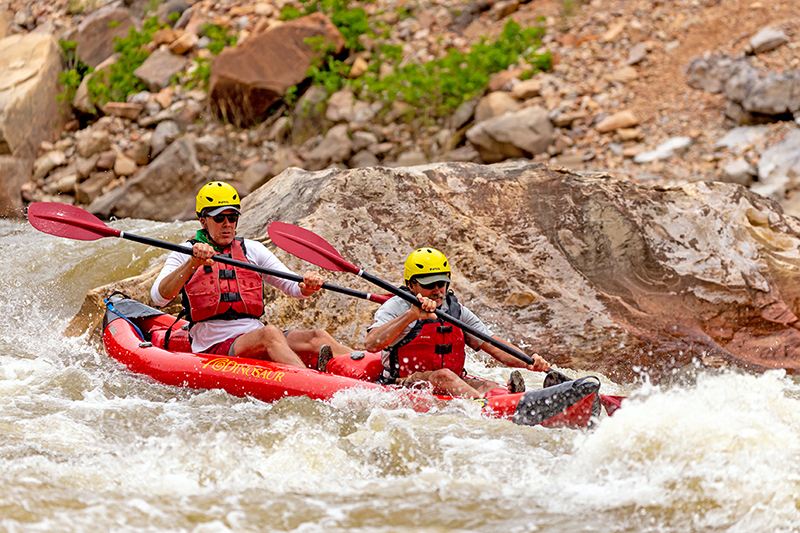 The Yampa isn’t beginner whitewater, but you don’t need prior experience. The trip welcomes first-time rafters who are comfortable with camping and prepared for genuine wilderness.
Ideal Yampa rafters are people who:
Want complete disconnection. No cell service. No internet. No contact with the outside world for four or five days. If this sounds liberating rather than terrifying, the Yampa is for you.
Appreciate wilderness camping. You’ll sleep in tents, use a portable toilet, and live by the sun’s schedule. Physical comfort exists—sleeping bags, good food, excellent gear, but it’s camping, not glamping.
Value unique experiences. The Yampa offers something increasingly rare: true wilderness. If that matters more to you than luxury amenities, this trip delivers.
Enjoy learning. The archaeological sites, geological features, and ecological richness create constant educational opportunities. Curious people who love discovering new things thrive on the Yampa.
Seasonal Considerations
Because the Yampa flows naturally, trip timing matters more than on dammed rivers.
Peak season runs from late May through mid-June when snowmelt creates high flows. These spring trips feature bigger rapids and powerful currents. The river’s energy is palpable, this is when you experience the Yampa at its wildest.
Early-season trips may encounter cooler weather but reward you with spectacular wildflower blooms and abundant water. Late-season trips offer warmer temperatures and lower flows, making swimming more enjoyable but reducing rapid intensity.
Call Dinosaur River Expeditions to discuss current conditions and which timing matches your preferences. Staff members track snowpack, weather patterns, and flow predictions to recommend optimal dates.
Why the Yampa Matters
In fifty years, will the Yampa still run free? Climate change threatens snowpack. Water demands increase as populations grow. Development pressures mount.
Running the Yampa isn’t just recreation, it’s witnessing something that may not last forever. Each trip documents a disappearing experience. Each person who experiences the river’s wild nature becomes an advocate for its preservation.
This awareness doesn’t diminish the joy of a Yampa trip, it deepens it. You’re not just having fun. You’re connecting with one of America’s last wild rivers, experiencing what most rivers once were, and understanding what we lose when we dam free-flowing water.
Planning Your Yampa Adventure
The Yampa requires more planning than day trips or even most multi-day rafting adventures. You’ll need to arrange time off work, prepare appropriate gear, and commit to genuine wilderness camping.
Dinosaur River Expeditions provides detailed packing lists and pre-trip briefings that help you prepare properly. They’ll answer questions about everything from sleeping bags to sun protection. They can rent you camping equipment if you don’t own it.
Book early. Yampa trips have limited availability due to permit restrictions and the seasonal nature of optimal flows. Popular dates fill months in advance.
The Experience of a Lifetime
Ask anyone who’s run the Yampa what they remember most. Answers vary: the power of Warm Springs Rapid, the silence of evening camps, seven-hundred-year-old art etched in canyon walls, Dutch oven cobbler under stars, or simply the feeling of genuine wilderness.
One recent guest summarized it perfectly: “The only thing wrong with my trip was that it ended. It was everything I hoped it would be, and much, much more.”
That’s the Yampa. America’s last wild river through Dinosaur National Monument. A journey through time, nature, and self. An experience that changes how you think about rivers, wilderness, and what we preserve for future generations.
The Yampa flows free today. Experience it while you can.


